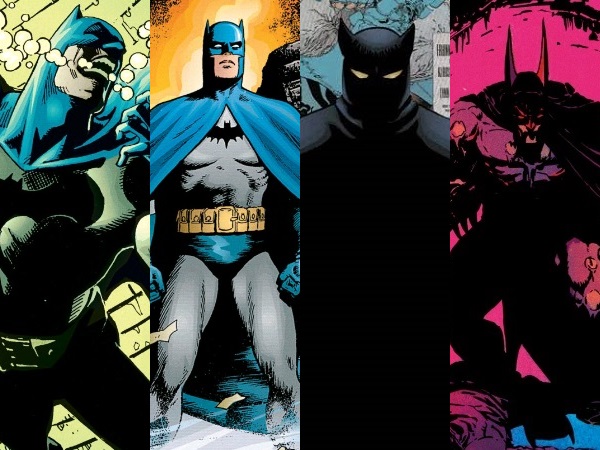
Keen to read some killer Batman stories, but finding the sheer amount of comics daunting? Well don’t worry – we’ve all been there!
In fact, often the best way to read great Batman stories is to throw yourself into them. The general rule of thumb is that Batman is one of the greatest comic book characters in the world, so there are many, many brilliant tales featuring the Caped Crusader, you just need to look around.
In fact, there are so many great Batman stories that a significant number of classic tales often get overlooked. But not here!
In this post you’ll find a run-through of some of the best Batman comics you’ve probably never read or even heard of. These aren’t necessarily the most famous Bat-tales, these are the gems that only real Bat-fans know about.
__
The Many Deaths of Batman
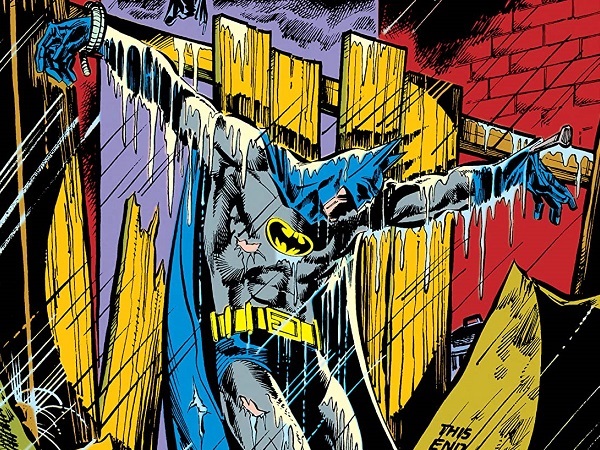
First up, published by DC Comics in 1989, The Many Deaths of Batman is a three-part story from writer John Byrne and illustrator Jim Aparo. Originally appearing in issues #433, #434 and #435 of Batman, The Many Deaths of Batman is a murder mystery centred around the Caped Crusader.
And what is perhaps most unusual about the story is the first chapter is told entirely through illustrations. With the exception of Commissioner Gordon, who utters one line of dialogue, no other character speaks during the opening act, making for an intriguing opener and an engrossing mystery!
The decision to remove almost all of the dialogue from the story makes Batman’s ‘death’ feel incredibly harrowing, and results in a truly remarkable piece of work.
__
The Laughing Fish
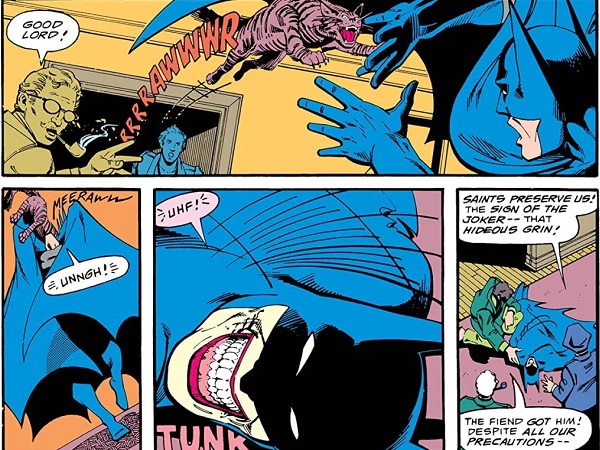
Up next, is The Laughing Fish. Written by Steve Englehart, illustrated by Marshall Rogers, and published in 1978 by DC Comics, The Laughing Fish originally appeared in Detective Comics issues #475 and #476, and tells the story of the Joker’s attempts to claim copyright over poisoned fish.
Madness? Of course! But in terms of Joker stories, The Laughing Fish is one of the best examples of a comic completely nailing the Joker’s character. The Joker’s plan to copyright fish is absolutely bonkers, yet it allows for writer Steve Englehart to showcase the way the Joker’s mind works.
The Joker conjures up this bizarre scheme without really thinking it through; almost as if he is bored and simply needs something to do. He then escalates the plan by turning to murder, simply because he is already committed to it.
There is something quite macabre in his plan and this is pure Joker through and through. From disfiguring fish to killing people over a copyright disagreement, it becomes clear he is a lunatic who craves attention from Batman.
__
The Fatal Wish
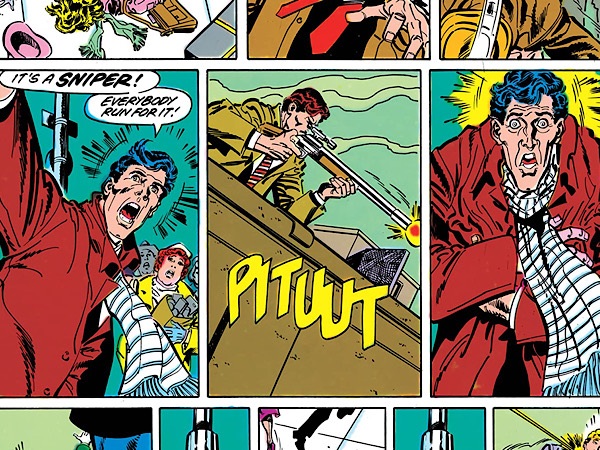
Published by DC Comics in 1989, The Fatal Wish is a standalone story which originally appeared in issue #430 of Batman. Written by Jim Starlin and illustrated by Jim Aparo, the story sees the Caped Crusader attempt to apprehend a gunman who is killing Gotham citizens.
During the course of the story, Bruce Wayne recalls the events that led up to the death of his parents. He also remembers a ‘wish’ he made, which continues to haunt him all these years later.
Now, what makes The Fatal Wish interesting is that it sets up two ways in which Bruce/Batman blames himself for the death of his parents.
The first is down to Bruce uttering the phrase “I wish he was dead”. Although the reader knows Bruce didn’t actually wish death on his father, it is clear these words have come back to haunt him time and time again.
The second way in which The Fatal Wish handles guilt, is connected to a cinema trip. Bruce’s father felt bad about lashing out at his son, so suggested a family night out to the movies. He knew that Bruce wanted to watch a specific film, and that seeing it would help smooth over his apology.
It was his father’s suggestion they watch the film, but Bruce doesn’t see it that way. He knows that going to the cinema was his dad’s way of making Bruce happy, so he blames himself for his family being in the city that fateful night.
All of the above is packed into a tale which also finds time to cram in plenty of action. The Fatal Wish is a classic Batman tale which manages to add something impactful to the mythology.
__
Shaman
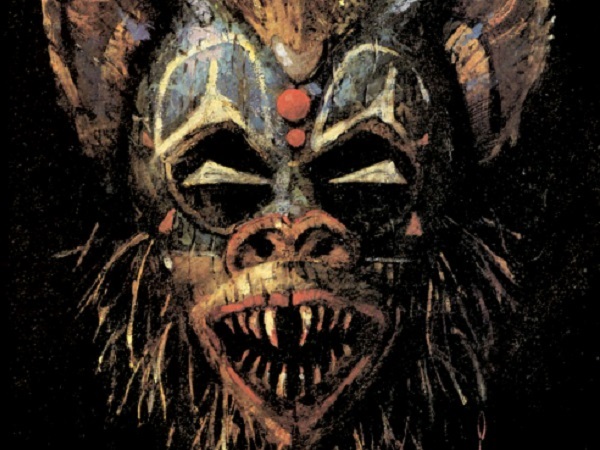
In 1989, DC Comics launched a new comic titled Legends of the Dark Knight. The book would go on to feature some truly great Batman stories, many of which are featured below.
The first story to appear in Legends of the Dark Knight was Shaman – a five-part tale published in issues #1 to #5. Written by Dennis O’Neil, with art by Edward Hannigan, Shaman takes place at the beginning of Batman’s career and has a slight supernatural element to the story.
Set during the Year One-era of Batman stories, Batman: Shaman is an engrossing detective yarn, which is well plotted and a delight to read. The story mostly focuses on presenting a more stripped back, realistic approach to Batman, yet at the same times has a hint of the unusual – slightly reminiscent of a mild episode of The X-Files.
The comic boasts strong artwork from Edward Hannigan, and is backed by a superb colour palette from colourist, Richmond Lewis. Lewis uses a minimalist approach to colour, and in doing so he is able to make the images very expressive.
The artwork compliments the story, which is brought to life by Dennis O’Neil. O’Neil had a long-standing association with the Dark Knight, having written and edited various Batman comics during his career, and proves to be the perfect scribe for this tale.
__
The Crime Doctor’s Crimson Clinic
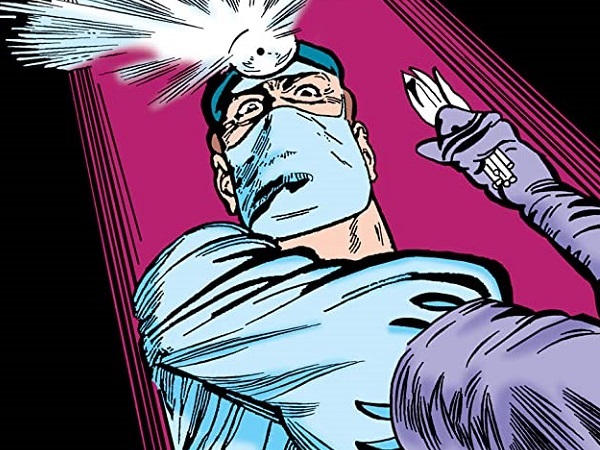
Written by Mike W. Barr and illustrated by Norm Breyfogle, The Crime Doctor’s Crimson Clinic is a standalone Batman story about an ex-con who gets mixed up with a backstreet surgeon. Published by DC Comics in 1987, the story first appeared in Detective Comics issue #579 and is worth reading for two reasons.
The first reason to read this story is because it is a morality tale – one that shows the importance of doing the right thing at the right time. It looks at the desperate decisions which can be made for money, but the good that can prevail from making better choices.
The second reason to read The Crime Doctor’s Crimson Clinic is because of the artwork by legendary artist, Norm Breyfogle. Breyfogle’s art is superb and truly mesmerising and really brings this story to life.
__
Blades
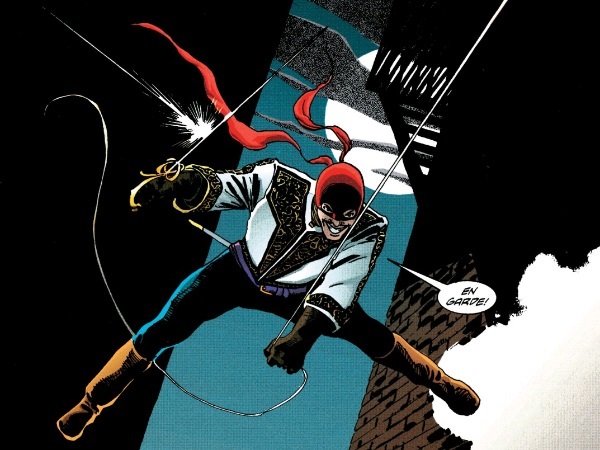
Originally appearing in the pages of Legends of the Dark Knight issues #32 to #34, Batman: Blades is a three-part tale about a mysterious new vigilante in Gotham City. Calling himself the Cavalier, this sword-carrying character initially appears to be the city’s new saviour, but it soon becomes clear he is not all he seems to be.
Written by James Robinson and illustrated by Tim Sale, Blades was first published by DC Comics in 1992 and is a superbly written, beautifully illustrated piece which introduces an exciting, yet conflicted character in the Cavalier. Taking inspiration from both Errol Flynn and Zorro, the Cavalier is a dashing and dynamic figure born from the classic age of cinema.
As a character, he is truly captivating – becoming the driving force of Blades. So much so, that Blades is barely about Batman – this is the Cavalier’s story.
And what a story it is. Blades is gorgeous to look at, with beautiful artwork and fantastic character work. Artist Tim Sale illustrated a number of great books for DC Comics, yet the oft-overlooked Blades is an example of just how strong his visual work was.
__
Mask
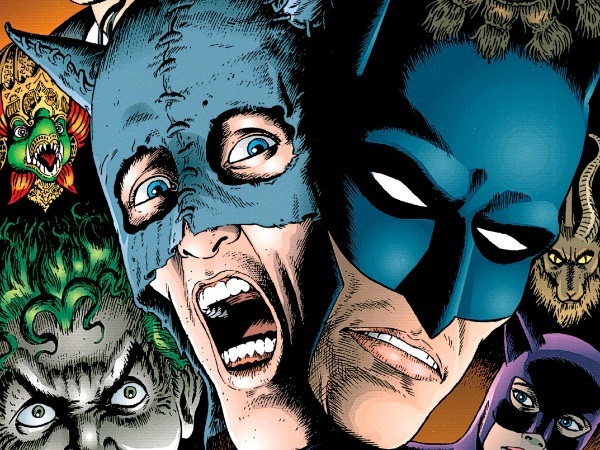
Mask is a two-part Batman story which originally appeared in the pages of Legends of the Dark Knight issues #39 and #40. Published in 1992 and written and illustrated by Bryan Talbot, the story sees Bruce Wayne drugged and psychologically manipulated so that he believe his life is a complete lie.
During the course of the story Bruce questions his own identity, wondering whether he is really a costumed crime-fighter, or just a penniless alcoholic. Does Batman really exist or is he just a figment of Bruce’s imagination?
__
The Cult
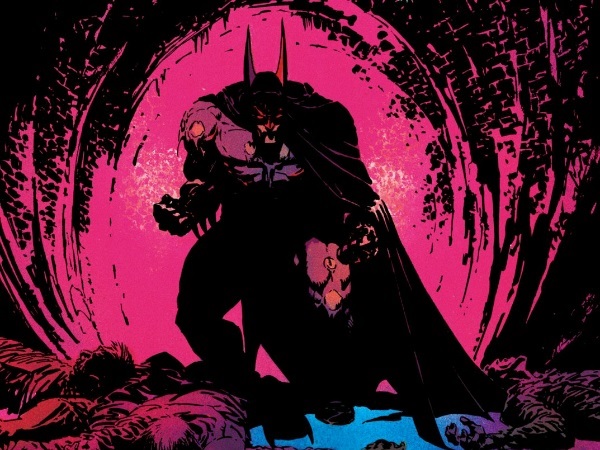
Published by DC Comics in 1988, Batman: The Cult is a four-issue mini-series, written by Jim Starlin, with art by Bernie Wrightson and colouring by Bill Wray. The book introduces a new villain in the form of Deacon Blackfire – a cult leader who wants to take over Gotham City.
Utilising (and brainwashing) the city’s homeless population, Blackfire amasses an underground army with the capabilities to overthrow Gotham. This puts him at odds with the Dynamic Duo, who must find a way to bring the villain’s reign of terror to an end.
Taking cues from the work of Frank Miller, writer Jim Starlin presents a tale which is deliciously dark, filled with duplicity, and steeped in gruesome imagery. Artist Bernie Wrightson provided the visuals for Batman: The Cult and paired with Starlin’s writing they are incredible.
Wrightson was a master of the macabre, having worked on various horror titles (he also co-created Swamp Thing), and his illustrations in Batman: The Cult are superb. His artwork is detailed and very imaginative, with characters and scenes that stay in the mind long after the page is turned. And all of the artwork is backed by a mesmerising colour palette courtesy of Bill Wray.
__
Stories
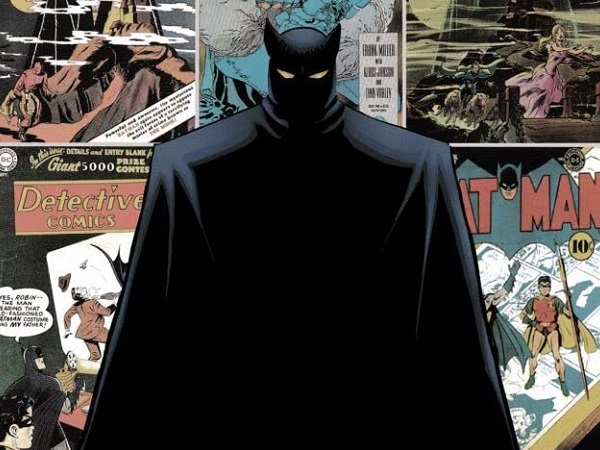
Stories is a standalone Batman tale first published in 1997. Originally appearing in issue #94 of Legends of the Dark Knight, Stories is from writer/artist Michael Gilbert and looks at the different ways in which the Caped Crusader has been depicted over the years.
The story focuses on a group of strangers who all have one thing in common – they have previously encountered Batman. Each stranger recounts their interactions with the Dark Knight, demonstrating the differences in his mythology.
Stories is a love-letter to the Batman comics of the past. It is a tale which offers up a snapshot of various incarnations of the Dark Knight and effectively says that it doesn’t matter if some versions of Batman appear bizarre or fantastical, they are all as valid as each other.
__
A Bullet for Bullock
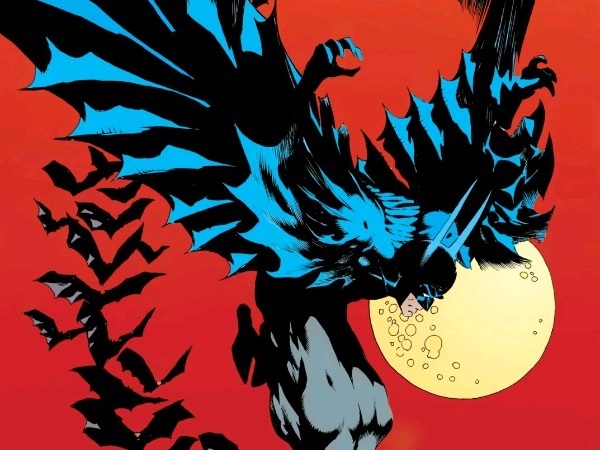
Published in 1992, in Detective Comics issue #651, A Bullet for Bullock is a standalone Batman tale written by Chuck Dixon, with art by Graham Nolan. Presented as a mystery/detective piece, the story focuses on Detective Harvey Bullock and the multiple attempts made on his life by an unknown assailant.
Boasting beautiful art, and great pacing/storytelling, which is reminiscent of an old detective yarn, A Bullet for Bullock is a satisfying read. It doesn’t attempt to reinvent the wheel, it just delivers the goods in an efficient manner, while proving to be highly entertaining.
__
Fever
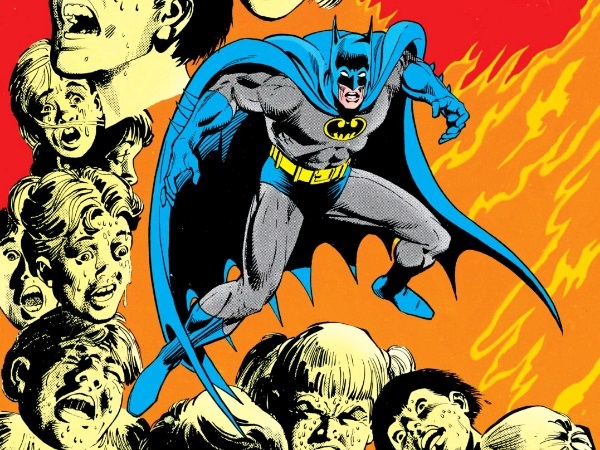
Written by John Wagner and Alan Grant, and illustrated by Norm Breyfogle, Fever is a two-part story about a designer drug. Originally published in 1988 in issues #583 & #584 of Detective Comics, the story marks the first appearance of Scarface and The Ventriloquist – one of the creepiest pairings in Batman mythology – and centres around the Dark Knight’s attempts to get the deadly drug off the streets of Gotham.
The Ventriloquist and Scarface make for a deadly combination. One is a straight-laced, seemingly mild mannered middle-aged man, while the other is a murderous doll.
In reality, they are one and the same. The Ventriloquist operates Scarface, giving him life and a personality separate from his own.
And what a personality. It is clear from this story, that The Ventriloquist/Scarface is/are a force to be reckoned with and a deadly adversary to the Dark Knight.
In Fever, John Wagner and Alan Grant write a psychologically fascinating duo, while Norm Breyfogle’s illustrations really bring this bizarre creation to life. Breyfogle was a master when he came to crazy, creepy characters and The Ventriloquist/Scarface combination is easily one of his best designs.
__
Venom
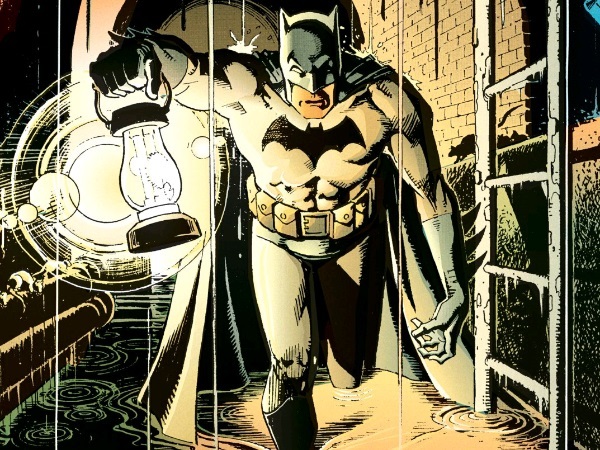
Published by DC Comics in 1991, Venom is a five-part story about Batman’s addiction to a performance enhancing drug. Written by Dennis ‘Denny’ O’Neil, with layouts by Trevor Von Eeden and pencils by Russell Braun, Venom originally appeared in issues #16 to #20 of Legends of the Dark Knight.
Spread across five issues, Venom plays out very well – delivering an action packed story arc which takes Batman on a journey of self discovery. Having the Caped Crusader addicted to drugs helps to highlight a chink in his armour, which in turn humanises him for this tale.
__
The Cape and the Cowl Deathtrap
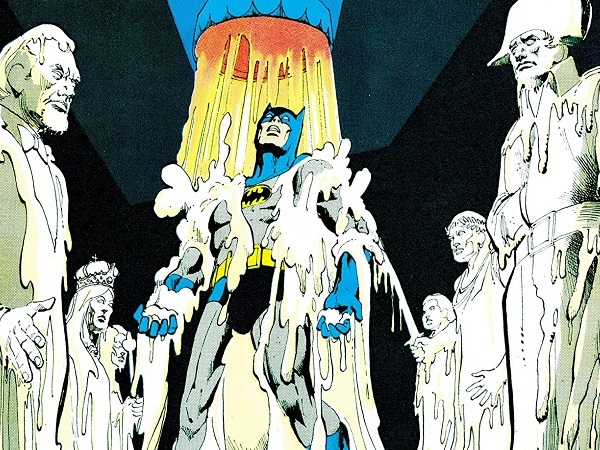
Published by DC Comics in 1975, The Cape and Cowl Deathtrap is a standalone Batman story written by Elliot S! Maggin and illustrated by Walter Simonson. The story first appeared in Detective Comics issue #450 and tells the story of a plot to obtain Batman’s mask.
Running to a mere 12 pages, The Cape and Cowl Deathtrap is a short, yet brilliant story which is a joy to read. The plot is well-paced by Elliot S! Maggin, while Walter Simonson’s illustrations are superb.
Working together, the creative duo deliver so many standout moments (the waxwork deathtrap, the big ‘reveal’ at the end, etc), that it is baffling how all this fits into so few pages. In fact, this tale could easily suffer from being too short, yet what it lacks in length it certainly makes up for in action and suspense to ensure it delivers.
__
Faces
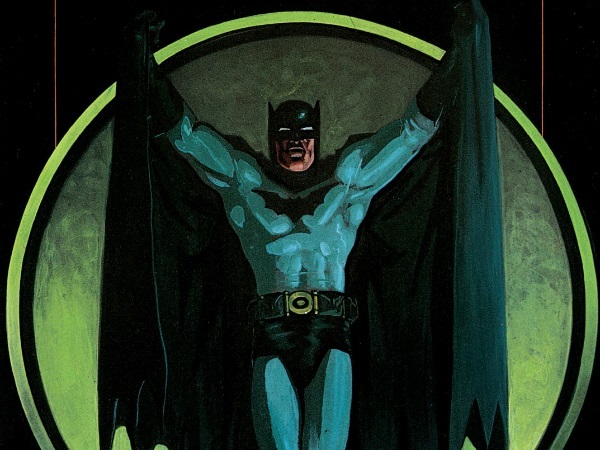
Faces is a three-part Batman tale featuring Two-Face. The story was originally published in 1992 by DC Comics, appearing in issues #28 to #30 of Legends of the Dark Knight.
Written and illustrated by Matt Wagner, the story sees Harvey Dent attempt to establish a new society made up of misfits. But in order for Dent’s plan come to fruition, he kidnaps, murders, blackmails and coerces those around him.
Faces is beautiful to look at. The artwork feels so immersive and intoxicating that it draws you in from the first page, then takes you along for the ride with some truly wonderful imagery.
But outside of the art, the story is also very strong. This is very much a detective tale, with a mystery that builds across all three parts.
Two-Face is at the centre of the mystery, but his appearance is peppered throughout the tale, so not to reveal everything too quickly. This helps to build up the intrigue.
Ultimately, this is a story about physical differences, and what makes someone a monster. It may be a well-worn trope, but it still feels fresh here, ensuring this story never runs out of steam.
__
Fear Itself
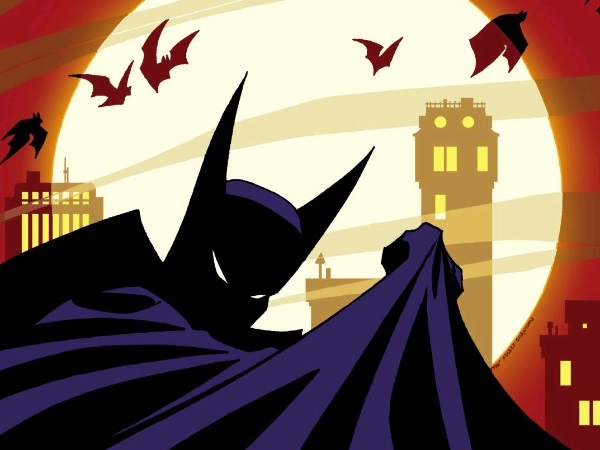
Published in 2004, in the pages of Batman Adventures issue #17, Fear Itself is a standalone tale about Batman’s encounter with Joe Chill – the man responsible for killing Bruce Wayne’s parents. Written by Ty Templeton and pencilled by Rick Burchett, Fear Itself marked the final issue in Batman Adventures – a comic book spin-off of DC Animated Universe shows Batman: The Animated Series and Justice League.
Joe Chill is a character many Bat-fans will be familiar with, but fans of the DC Animated Universe? Perhaps less so.
Chill was never featured in shows such as Batman: The Animated Series and Justice League and even the comic book spin-offs ignored him. Why? Because the DCAU version of Batman was never concerned with who killed the Waynes, so Chill was never important.
So by bringing Joe Chill into the Batman Adventures it was actually quite a surprise. Here was this iconic character from the Batman mythology, who had been absent from the DCAU for years, and now, finally, his story was set to play out.
The crux of this tale is that Chill has lived his life haunted by the fact he killed the Waynes and left a witness alive. He has spent his life looking over his shoulder, waiting for Bruce Wayne to recognise him.
But the twist in the tale is that while Chill obsesses over Wayne, Bruce has no idea who Chill is. The reader knows of Chill’s connection to Batman, but the Caped Crusader is oblivious throughout the entire tale.
This might seem cruel, that Batman never gets to learn how significant Chill is, but it actually works in the context of the DCAU. Batman’s mission in the DCAU is never about finding one killer, it is about stopping all of the bad guys – that is his goal.
By demonstrating that Chill is effectively another hood to Batman, the Caped Crusader is able to continue his role as protector. Yet at the same time, we the reader know that Chill did ultimately pay for his crime, which means the murder of the Waynes did get some closure.
__
Her Sister’s Keeper
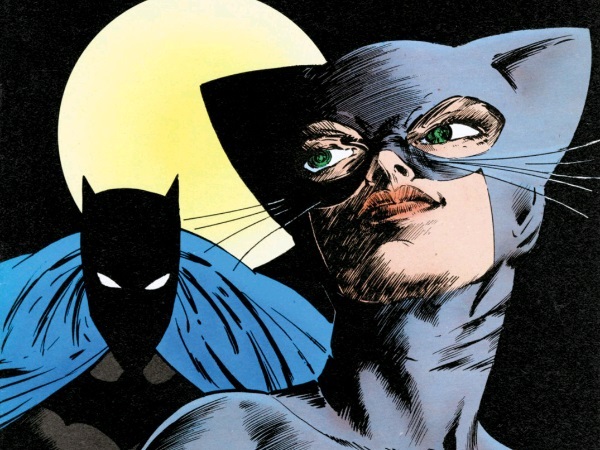
Published by DC Comics, Catwoman: Her Sister’s Keeper (aka Catwoman 1989: The Mini-Series) is a four-issue mini-series by Mindy Newell, J.J. Birch & Michael Blair. The comic – which carried a ‘suggested for mature readers’ disclaimer on the cover of each issue – focuses on Selina Kyle’s transformation into Catwoman.
Set during Batman’s early career, in essence Her Sister’s Keeper is a Year One-style book, which throws a spotlight on Kyle’s path towards Catwoman. The story is a companion piece to the legendary Batman: Year One, with a couple of key moments linking the two stories together.
__
Resurrection Night
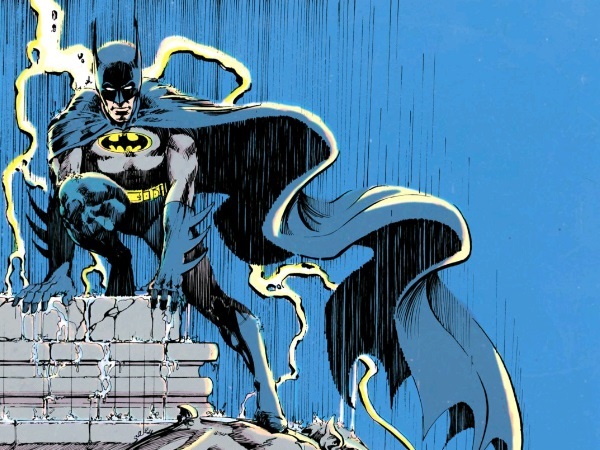
Published by DC Comics in 1986, Resurrection Night is an epic Batman story featuring a wealth of the Caped Crusader’s most iconic foes. Written by Doug Moench and illustrated by a whopping 21 artists the story first appeared in Batman issue #400 and saw the Dark Knight face countless foes, all of whom are working for Ra’s al Ghul.
Resurrection Night is a fun Batman tale, filled with arguably one of the best elements of the Batman mythology – the villains! And because there are so many foes in one story, the excitement and suspense never lets up!
What’s perhaps most surprising about this story is just how deceptively long it feels. Thanks to the way the tale is structured (with individual chapters and an epilogue), writer Doug Moench and his team of talented artists make this feel like a huge, sprawling story spanning more than its mere 65 pages.
Those who enjoy big Batman stories, filled with villains, will find much to enjoy in Resurrection Night. Plus the sheer amount of art on offer, from all the different artists, is enough to keep every reader entertained.
__
Ego
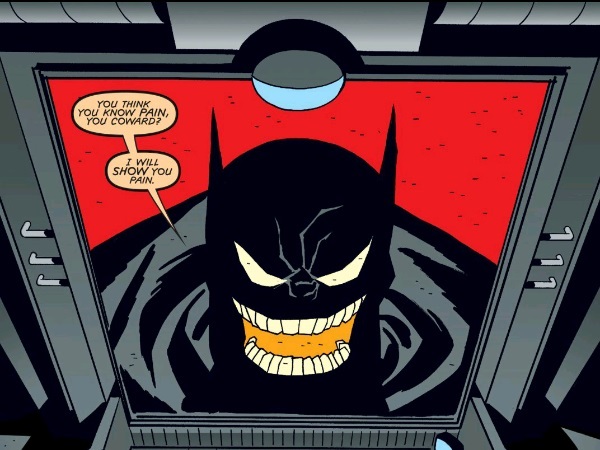
Published by DC Comics in 2000, Batman: Ego is a one-shot comic which places the spotlight on the fragile psyche of Bruce Wayne. Written and illustrated by the late Darwyn Cooke, the story sees Bruce wrestle with the darker aspects of his alter-ego, to determine whether he should continue to fight crime as Batman.
At just under 70 pages long, Batman: Ego is relatively short Batman tale, but certainly one that is worth reading. The story provides a fascinating journey into the mind of Bruce Wayne, while the eye-popping imagery is beautiful to look at.
Darwyn Cooke had a distinctive art style, which favoured a more cartoonish aesthetic. It was this style which made his characters leap off the page and this is very evident in Batman: Ego, which is filled with larger-than-life figures.
Those who like the work of Jack Kirby or Bruce Timm will find much to enjoy with this story. In fact, fans of Batman: The Animated Series will really like what is on offer, as Ego feels somewhat spiritually linked to the show – even though it is very much its own thing.
__
Batman in Bethlehem
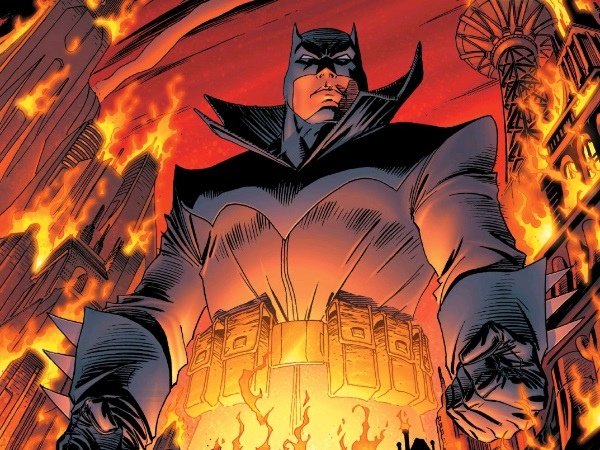
Published in 2007 by DC Comics in Batman issue #666, Batman in Bethlehem is a standalone tale featuring Damian Wayne – the son of Bruce Wayne. In the story, set 15 years into the future, Damian has taken over the role of Batman, becoming Gotham’s dark new protector.
Written by Grant Morrison and pencilled by Andy Kubert, Batman in Bethlehem sees Damian investigating the murders of various Gotham mob bosses. As the death count rises, the Gotham Police Department become convinced that Batman is the killer, but the Caped Crusader is busy tracking down the real culprit.
Showcasing stunning visuals, as well as an intriguing and stark (possible) future, Batman in Bethlehem is a great read. It leans heavy on action, rather than story, but this allows for some dynamic fight scenes with Damian Wayne kicking all kinds of butt as a very brutal Batman.
__
The Batman Nobody Knows
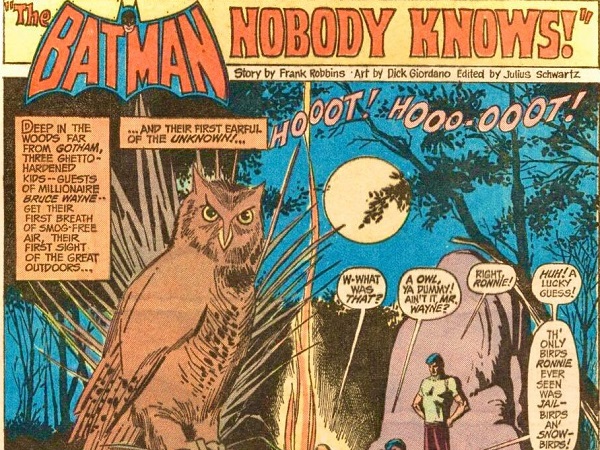
And finally, published in 1973 by DC Comics, The Batman Nobody Knows is a short story which first appeared in Batman issue #250. Written by Frank Robbins, with art from Rick Giordano, The Batman Nobody Knows sees three kids give their interpretation Batman, with wildly different accounts.
At just six pages in length, which is incredibly short, The Batman Nobody Knows is most certainly worth a read. Not only is it entertaining it is also quite influential, as it provided the ideas for Stories (mentioned above), as well as the Batman: The Animated Series episode, Legends of the Dark Knight.
__
__
Thank you for stopping by It’s A Stampede! to read this post about Batman. For more posts be sure to check out the recommended reads below.


Leave a comment