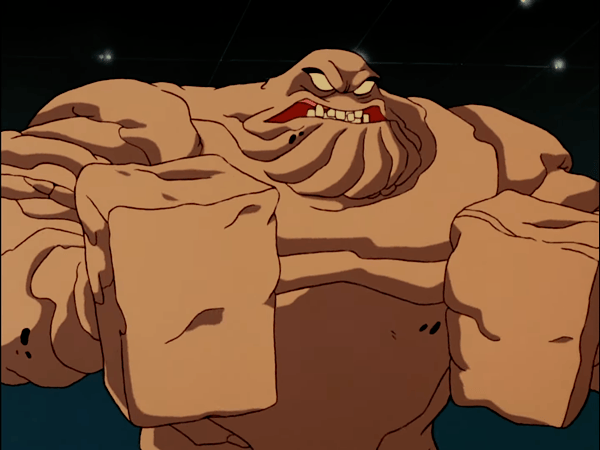
If you have watched the live-action body horror movie, Clayface, you are no doubt wondering where you can soak up more stories featuring the shapeshifting villain, Matt Hagen. Of course, you could dive into various Batman comics or trade paperbacks, where you will find some compelling tales, but if you want to take a look at the greatest Clayface story then its animation you need to delve into.
Back during the early ‘90s, Batman: The Animated Series was wowing audiences with its brilliant take on the Caped Crusader, and amongst some truly fantastic episodes featuring the likes of the Joker, the Riddler, and the Scarecrow, was a marvellous two-part story detailing the origin of Clayface.
The story – Feat of Clay – was written by Marv Wolfman and Michael Reaves, with a teleplay by Wolfman and direction by Dick Sebast. As for the story, it introduced Hagen as a disfigured actor with a serious problem on his hands.
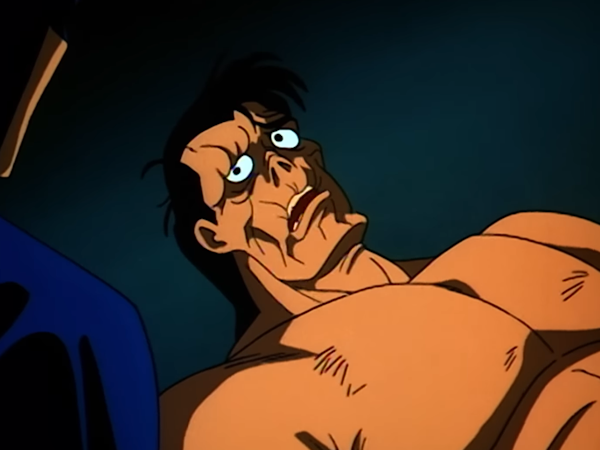
In Feat of Clay, Hagen is undertaking criminal activity for sketchy Gotham City businessman, Roland Daggett. This activity includes impersonating Bruce Wayne to conduct a robbery.
His disguise is so good, Hagen is able to fool Bruce’s friend and associate, Lucius Fox. And the reason Hagen pulls it off is partly because of his acting skills, but mostly because he is able to reshape his face.
Hagen developed this talent following an accident which left his face severely disfigured. Desperate for a way to improve his appearance, he began using an experimental new face cream, named Renuyu, which was supplied by Daggett.
The cream worked wonders and allowed Hagen to re-mould his face to what it looked like prior to a car accident. The effects were temporary, but for short bursts of time it gave him back his looks, as well as his confidence, and Hagen could continue his acting work.
But having access to Renuyu came with a price. Daggett had Hagen perform certain jobs for him, which would see him temporarily impersonate other people, such as his impersonation of Bruce Wayne.
Hagen went along with the agreement, but over time became addicted to the unique properties of Renuyu. As such, when the cream runs out, he is soon breaking into Daggett’s manufacturing facility to obtain a supply for himself.
Intercepted by Daggett’s goons mid-break in, Hagen is taught a lesson about stealing. One of the goons, Raymond Bell, pours an excessive amount of Renuyu over Hagen’s face, smothering him in the process.
Hagen’s body absorbs the cream, and he is left for dead. However, Hagen doesn’t die, and instead undergoes a significant transformation.
Mutated into a walking lump of clay, Hagen can now reshape his entire body. He can take on the appearance of anyone, no matter the shape or size, and he can form clothes, as well as weapons with his hands.
But this transformation is too much for Hagen’s mental state, and thoughts of revenge fill his mind. He seeks out Daggett, but encounters Batman in the process, who is trying to uncover the truth about who impersonated Bruce Wayne.
With Hagen’s first attempt to locate Daggett thwarted, he makes a second attempt, attacking Daggett while he is making a live television appearance. However, Batman interferes once again, now firmly in the knowledge that Hagen is the one who framed Bruce Wayne.
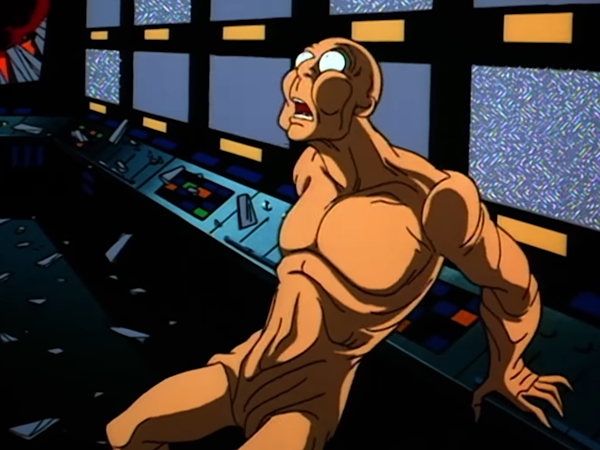
The pair get into a fight, before Batman is able to temporarily overwhelm Hagen with video images from his past, specifically characters Hagen has played on screen. Seeing all the different images causes Hagen to involuntarily transform his appearance multiple times in quick succession.
The transformations become too much and as Hagen lashes out in reaction, he accidentally electrocutes himself. It would appear as if Hagen dies in the accident, but it is later revealed he faked his death to escape capture.
The first instalment of Feat of Clay largely deals with Hagen’s impersonation of Bruce Wayne, his addiction to Renuyu, and the overdose which transforms his body. It’s a strong start, which sets up who Hagen is, and makes it clear this isn’t a particularly good person, no matter what tragedy befalls him.
Sometimes the audience is asked to sympathise with Batman villains, and it certainly happens in Batman: The Animated Series, but this isn’t the case here. With Clayface in Feat of Clay – Part One, Hagen is shown to be egotistical; he undertakes criminal activity; and he has no qualms about breaking and entering in order to fuel an addiction.
So, this opening chapter creates a solid start for Hagen’s self-inflicted journey. But while Feat of Clay – Part One is strong, Part Two is even stronger.
This second half of the story focuses on Hagen’s transformation into Clayface, as well as his desire to seek revenge on Daggett. Hagen feels Daggett exploited him and he believes he is ultimately responsible for his current situation.
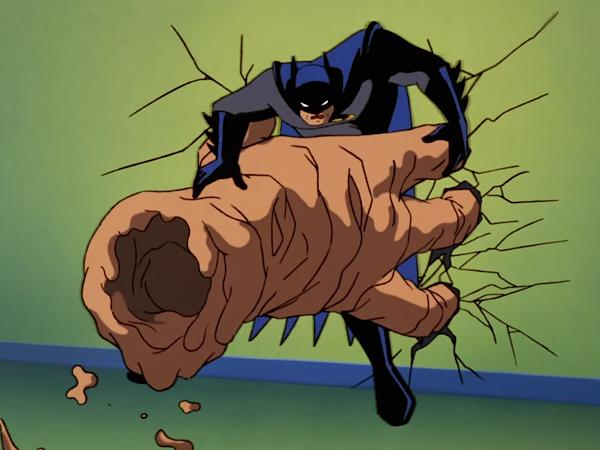
During this episode, audiences get to see the extent of Clayface’s desire for revenge, as well as the extent of his abilities, which seem more than a match for Batman. The animation on display in Part Twois also top notch.
Two animation houses worked on Feat of Clay. Akom Production Co. delivered the animation for Part One, which is perfectly good and in keeping with what you might expect from Batman: The Animated Series, but Part Two was handled by fan-favourite studio, Tokyo Movie Shinsha Co. (aka TMS), who are known for producing some exquisite visuals and with Part Two they don’t disappoint.
Every scene featuring Clayface in action is a piece of art worth framing. Clayface’s final encounter with Batman is also a delight to behold, especially when finds himself losing control of his body as he transforms into different characters.
The subsequent reveal of his fake-out ‘death’ is a true delight too, and is arguably the only moment where the audience might feel an ounce of empathy and sadness for him. But this is largely down to an emotive piece of music from the late composer Shirley Walker, which is used as Clayface’s theme and plays out across the end scene.
The theme is a melancholic tune, which emphasises the sadness we all might feel, seeing a human being turned into the physical embodiment of a monster. Yet at the same time it doesn’t want the audience to feel too much sorrow for Hagen, because remember, he’s largely to blame for his predicament.
There’s a dark edge in the music, which highlights the dangerous, manipulative side to his persona. So, it’s effective in carrying the weight of the scene, while never taking away the threat that Clayface poses.
Clayface has appeared in animation multiple times, and as mentioned earlier there are plenty of comic book stories to delve into if you want to get lost in his world. However, the best Clayface story is Feat of Clay.
Across two, twenty-minute episodes, the story is able to showcase who Matt Hagen is, what drives him, what causes him to stumble, and how threatening he can be. The superb animation during the second part of the story elevates the writing even further, while the music is the cherry on top, and the elements of body horror are front and centre.
All-in-all, it’s a stand-out tale. If you’ve let it pass you by so far, rectify the situation at your earliest convenience.
—
—
Thank you for stopping by It’s A Stampede! to read this post about Clayface. For more posts be sure to check out the recommended reads below.


Leave a Reply