
Still playing in UK and US cinemas, having been on general release since mid-June, is the comedy-drama, Asteroid City. Directed by Wes Anderson, the film is a metatextual piece set in 1955, and features an all-star cast including Jason Schwartzman, Scarlett Johansson, Tom Hanks, Jeffrey Wright, Tilda Swinton, Margot Robbie, Steve Carell, and far too many names to mention here (believe me, there’s a lot).
The movie is staged as a play, which is set in and around the events of a small desert town in the US called Asteroid City. In the film, various characters are in town for the Junior Stargazer convention, including war photojournalist Augie Steenbeck and his children, and actress Midge Campbell.
Steenbeck is recently widowed, and after meeting Midge they engage in conversation. Meanwhile, the convention plays out, with various attendess interacting, before a ceremony takes place.
During the ceremony a UFO suddenly appears and an alien emerges from the space craft. This event causes the town to be put into lockdown by the US military, until every person can be medically and psychologically evaluated.
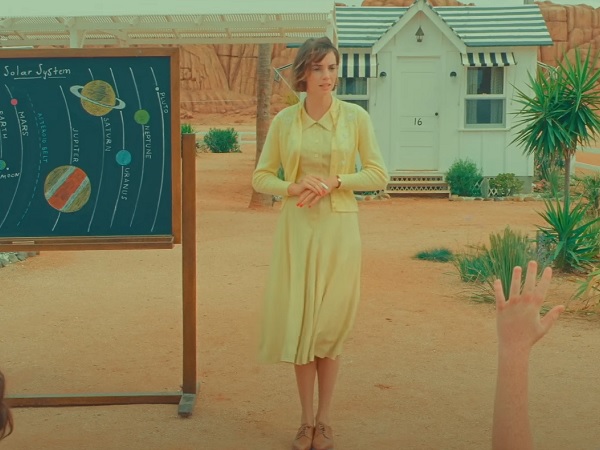
As with most Wes Anderson movies, Asteroid City is gorgeous to look at, incredibly stylised, and extremely quirky. Anderson makes films unlike any other director, and as soon as you cast your eyes on one of his pictures (The Royal Tenenbaums, Fantastic Mr. Fox, etc), you know what you’re in for.
And if you’re a fan of the director’s work, then I expect you will get something out of Asteroid City. The film is filled with Anderson’s signature eccentricities and snappy dialogue, as well as some eye-catching visuals, and the whole movie is bathed in a delightful colour palette.
As for those who aren’t Anderson fans, I’m not entirely sure this is the picture to convert you. Asteroid City is a bit too into itself, conveying an air of self-importance that becomes distracting, while its broken structure which revolves around a play makes it feel convoluted.

On a technical and visual level Asteroid City shines, and there is no denying it is something which stands head-and-shoulders above its peers. This film caters for its audience in a way that few others do, and Anderson’s homages to 1950s sci-fi and the atomic age are imaginatively realised on screen.
But moving beyond this, this is a difficult film to like. The characters feel like one-note caricatures, the story lacks focus, and despite the speed at which everyone delivers their dialogue, the movie drags beyond belief.
At no point did I connect with the material or find any real enjoyment in the story. Sure, Asteroid City looks great, but so does Patrick Bateman in American Psycho, that doesn’t mean I wish to spend a couple of hours in his company.
When I sit down to watch a movie, I want to be captivated by the story as much as the visuals. It simply can’t be one over the other, because this causes a huge imbalance, and that leads to me mentally checking out.
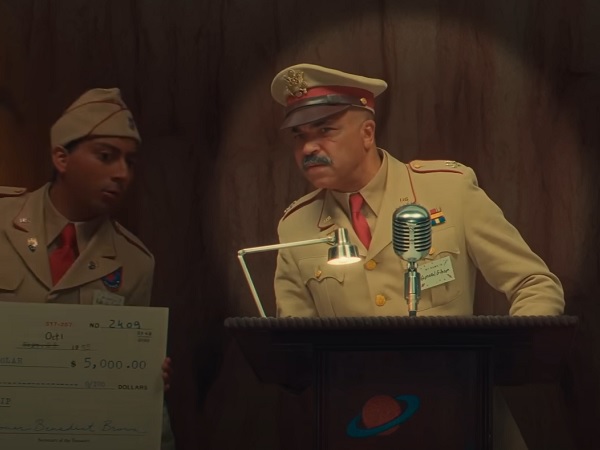
At all times while watching Asteroid City, I found myself feeling less like I was viewing a movie, and more like I was watching a collection of actors acting. This film may have an impressive and exhaustive cast, but I have little interest in watching famous faces doing ‘a bit’ and that’s simply the impression I got here.
There are some films which feel as if they are made for audiences, and there are some which feel as if they are made for actors who want to show off their skills. This one certainly falls into the latter category and as I’m not an actor myself, this is not something I need to spend my time on.
Asteroid City deserves praise for its set designs and its overal aesthetic, but that’s about it as far as I’m concerned. I’d say this film is an acquired taste, and most likely only going to appeal to those already invested in Anderson’s oeuvre, and dare I say it, perhaps a bit ‘too-Anderson’ for its own good.
__
Thank you for taking the time to read this review on It’s A Stampede!. For more reviews, check out the recommended reads below.
 It's A Stampede!
Leave a comment