
Be honest now, do you believe movies just aren’t as good as they once were? Do you think the golden years of cinema are gone?
Hmmm. Well, I hear what you’re saying.
Oh, I don’t believe movies are rubbish these days, nor do I think the industry should throw in the towel, but I am aware some people feel this way. I’ve read plenty of comments online which suggest movies are a bit ‘meh’ at the moment, and I’ve heard people say to me “there’s no good films anymore”, so I know this is a real gripe.
But it’s not a gripe I subscribe to. Why? Because I watch a lot of new films (over 250 last year) and every year there is a mix of good, bad, and something in between.
It’s the same pattern over and over again. Oh, some years are a little better than others (check out 1993 or 1999, those years had plenty of bangers), but it generally all balances out in the end.
So, if what I’m saying is to be believed, what’s changed to make people think things have gotten worse? And why does it seem like there are so many crap movies nowadays?
Well, while there are a number of factors in play which aren’t helping (too many sequels, a lack of creativity, social media rotting our brains, etc), but the problem as I see it is this: We are not making as many active choices when it comes to what movies we watch. Far too often the damn algorithm is choosing for us and we need to get back in charge!
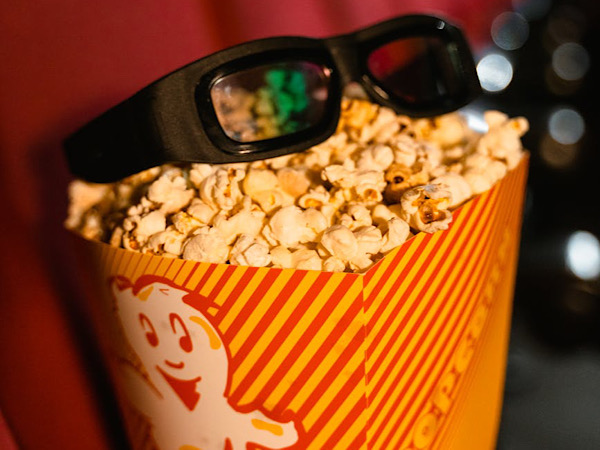
Think back 40, 30, or even 20 years ago and things were considerably different. The majority of the best movies would play in cinemas, and we would go and watch them.
If we missed them on the big screen, we’d wait until they went to video or DVD and we’d go and rent them from our local video rental store. We’d actively choose to put on our shoes, leave the house, and pay to rent the movies we wanted to watch.
And if for some reason we didn’t watch the movie at the cinema or through video rental, then chances are we’d buy it, borrow it, or catch it when it was screened on TV, which we would make time in our day/week to watch. All active choices.
But over the past decade things have changed. Streaming has become the default setting for viewing TV shows and movies, and while streaming gives us access to thousands of titles, is cheap, and is convenient, it has started taking control of what we watch.
It might seem like we are in control, but we are now making less active choices than we once were. Every time we open up a streaming service, the algorithm bombards us with suggestions for movies and TV shows to watch, and it’s influencing us with utter shite.
You see, the aim of a streaming service is to keep paying customers occupied. And while it may seem like this should be via top notch entertainment, more often than not streamers favour quantity over quality and will happily serve up any old crap.
If the service doesn’t have the thing you want to watch, it prides itself on providing plenty of alternatives. But while it may have many back-up shows and films available to ensure customers always have something to watch, it is making the choices here, not you, and you’re getting the shitty end of the stick with a bunch of stuff you don’t care about.
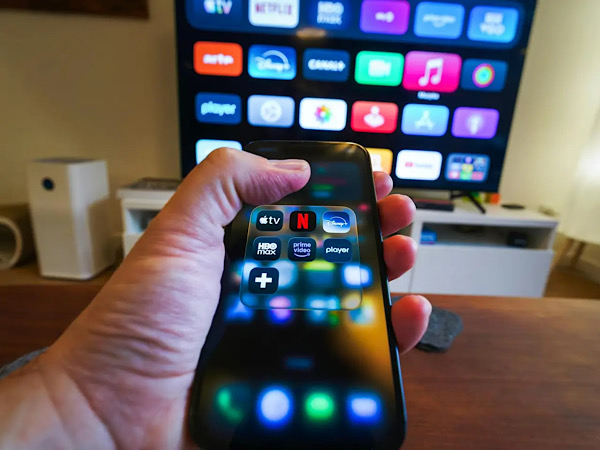
Think about it. How many times have you switched on Netflix, perhaps hoping to watch a specific film, and ended up watching something else because the film you wanted to watch isn’t available? It happens all the time, right?
You type ‘Indiana Jones and the Last Crusade’ into the search bar, and you are greeted by a message which says: “We don’t have that, but you might like this.” The message is then followed by a sizeable selection of movies which have nothing to do with Indiana Jones and the Last Crusade.
Oh, occasionally you might be presented with another film starring Indiana Jones actor, Harrison Ford, but often the alternative choices will be tenuously connected at best. You might get a couple of films from the ‘80s (i.e. the same decade as The Last Crusade) or you might get some terrible Indiana Jones-style knock-off, which originated on Netflix and is poor to say the least.
These suggestions might encourage you to watch an alternate film which Netflix has selected for you, but it’s not what you want. And because you watched the movie that was chosen for you, the Netflix algorithm thinks you are happy with this arrangement and begins choosing other movies which it thinks you might like, based purely on this alternate film.
So, you started off wanting to watch a Steven Spielberg-directed Indiana Jones movie, but ended up watching some random low-rent action film instead, and now suddenly the vast majority of the films being recommended are other low-rent action films that have nothing to do with Indy. And if you watch another suggested title, the algorithm gives you more of the same.
In fact, the algorithm is keen to give you as many low-rent action films as it can, because it thinks this is what you want. It doesn’t understand you wanted to watch Indiana Jones and the Last Crusadebecause you like Spielberg movies, or because you have a thing for archeology; instead it thinks you like action movies of any quality.
Fine, you can ignore it for now, but after a while, this is all you get offered. That is until you search for Independence Day, get offered some low-budget sci-fi schlock, and suddenly this is all over your recommendations page instead.
Once again, you try to ignore it, but what you don’t notice is that over time, you start to lose a bit of interest in movies in general. Because from your perspective, all you see now are crap movies on Netflix, and you start to think this is the current shape of the industry.
This is something which is then made worse by the constant barrage of mediocre movies which originate on Netflix, presented as ‘Netflix Originals’. These titles appear on the streaming service on a weekly basis like a conveyer belt of crap, and they clog up your recommendation feed even further.
From time-to-time there is some genuine gold amongst these titles, such as KPop Demon Hunters, The Rip, or Guillermo del Toro’s Frankenstein, but there are far too many run-of-the-mill films which simply disappoint. Netflix may sell them to you as big movies you don’t want to miss, because they star recognisable names such as Adam Sandler, Ryan Reynolds, or Dwayne Johnson, but it’s largely all hype and the films are shit.
And fess up, how many times have you sat down to watch a new Netflix Original movie, only to find yourself doom scrolling on your phone within the first ten minutes of pressing play? We all do it, because too many streaming films are poor.
And if you’re someone who doesn’t go to the cinema any more; who doesn’t rent, buy, or borrow movies; and who no longer reads a dedicated film magazine or watches a TV show promoting all the new movies, then you probably don’t know what films are out on release. The vast majority of what you are now seeing are the crap movies your subscription-based streaming service is sending your way.
And by the way, the algorithm doesn’t know they are crap, nor does it care about things like this. Its job is to simply present you with something to watch, irrespective of what it is.
So, what can be done about this? Cancel all subscription services and hope for the best?
Well, no, because as mentioned above, streaming services are affordable and convenient and from time-to-time they offer some good films, so let’s be realistic here. But what we all need to do is take back control of what we watch; understand Netflix isn’t the best place for movies; and stop giving in to the algorithm.

Over the past couple of years, I’ve introduced a weekly movie night at home. It happens every Thursday, with a different movie every week, watched by me and my husband.
I’m the big film fan in the family, so I organise the movies. Some weeks we watch a movie bought or rented digitally, while other weeks it will be something I have chosen from streaming (but without the algorithm’s interference).
Quite often it’ll be something on disc. Yep, good ol’ fashioned DVD gets quite a look-in at our house, and we will regularly watch a run of movies which have just made it onto disc, having recently left the cinema.
Now I know that not everyone wants to buy discs, and quite a few people don’t even have disc drives to play physical media any more, but boy, DVD has been quite useful for us. It allows us to watch a bunch of films which I’ve specifically chosen from a shop, and my choices aren’t hampered by the content restrictions of streaming.
What I mean by this is with so many streaming services available these days (Netflix, Disney, Apple, Peacock, Paramount, HBO Max etc), all of the big films are now spread out across various services. So, in order to watch everything that was released on the big screen, you now need to subscribe to multiple streaming platforms to watch the best stuff.
If you want the latest Marvel movies you’re going to need to subscribe to Disney+. Whereas if you want Mission: Impossible, you’ll need Paramount+.
Superman? HBO Max. F1? Apple. As for the rest, well it depends on what studio owns it and what deal it currently has with a streaming platform.
Whereas with disc, I simply go to HMV or Fopp, pick up all the titles in one place, and then watch them at our leisure. Just like we did in the ‘80s, ‘90s, ‘00s etc, I’m gathering together the titles I want to watch, and not what the streaming services want me to view or have access to.
So, the question now is: How does anyone know what films to watch anymore? Well, in my case it’s because I review new movies each week on this blog, so I see most of what the industry has to offer and can cherry pick the top titles for our weekly movie night.
Of course, this isn’t going to be the same for everyone else, so here’s what I recommend;
- Find a film fan and/or film critic you trust and keep a note of their top recommendations. You don’t have to like or agree with everything the fan/critic recommends, but over time you’ll know what’s going to work for you and what isn’t. Decades ago we used to watch all the major film critics on television recommending us the best films, but this has fallen by the wayside and we have lost something valuable. So, find someone you trust and listen to them.
- Keep track of what is out and available – specifically what has been released at the cinema. While not everything that plays on the big screen is gold, the films that go to the cinema before they go to streaming tend to be the ones studios have faith in and therefore are often better. If I was to list the best films of the last few years, the majority would have received a theatrical release rather than a direct-to-streaming release.
- Google the 20 highest grossing movies of the last year, as well as the best movies chosen by a blogger or magazine writer – not AI. These films tend to be the best or most popular, and therefore are less likely to be shite.
- Buy, rent, or borrow the movies you really want to watch. Don’t wait for the latest horror or sci-fi movies to pop-up on Netflix, as this could take ages, go out and find the films you want to watch. I appreciate times are hard and money isn’t always readily available, but if you’re paying for subscriptions to multiple streaming services, then consider dropping the one you rarely watch and invest that money in a monthly trip to the cinema, or a DVD purchase or digital rental, which you can share with your inner circle. If you have friends or family members that like watching movies get in the habit of swapping what you’ve got or splitting costs. Once upon a time, we all used to pay for films, but now we refuse because “we already pay for Netflix.” But paying for Netflix isn’t the solution if it’s only serving us films we don’t like.
- If something sounds crap, looks crap, and the basic premise doesn’t entice you, then it’s probably rubbish. Likewise, if something is being hyped as the best movie of the year by critics, but it looks like stuffy twaddle that holds no appeal outside of snobby award ceremonies, then don’t feel the need to watch it either. Use your own judgement.
- Don’t let Netflix, Disney+, Amazon Prime Video etc dictate what you watch. Always remain actively in control of what you watch by making informed choices. The algorithm is not the best decision maker, nor is any new AI tech. Technology might be useful for some things, but it lacks the nuances you get from human experiences or recommendations. Remember: The algorithm is designed to keep you viewing, but it doesn’t care what you view, so ignore it.
- And finally, to expand your horizons (and move you away from the crap), mix some stone-cold classics in with the new movies. I guarantee there are plenty of great films from the past which you haven’t watched yet, so they will be perfectly ‘new’ to you. And the best way to do it? Go back a decade! Born in the ‘80s? Then watch some films from the 1970s. Grew up in the ‘00s, then hit up the ‘90s for some top titles. Mix and match old with new and build your own playlist.
Streaming isn’t evil, nor is it a waste of time or money, but it isn’t the best way to view the full range of movies available each year. Each streaming service has access to a limited number of titles, so if you only watch films via Disney+ or Netflix etc, you’re only really seeing a small selection of what is being made.
Push outside of the confines of streaming, and seek out better material. Get back into the habit of going to the cinema, as well as renting or buying movies, and listen out for recommendations.
Be more active, and less passive. Movies haven’t gotten worse, we just aren’t making enough effort to engage with the best films.
—

—
Thank you for stopping by It’s A Stampede! For more posts be sure to check out the recommended reads below.
 It's A Stampede!
Leave a comment