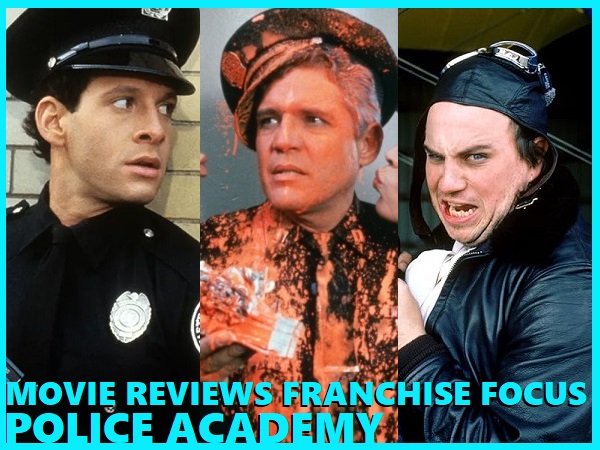
Younger readers (those who grew up post 2000) may not be aware of this, but there was once a point in time when the names Mahoney, Tackleberry, and Commandant Lassard were used with regularity. It was a time when the phrase, “Don’t move, dirtbag”, was akin to a war cry, and where The Blue Oyster was a lively drinking and dancing establishment for gentlemen with handlebar moustaches.
There was also a moment in history when the Police Academy movie series was quite popular. Oh, the critical response tended to worsen with each new entry, but over a ten-year span the film series proved rather profitable, and audiences seemed to like them.
Between 1984 and 1994, seven Police Academy movies were made, with a combined budget of $80 million. In total, the septet took over $541 million at the worldwide box office, which isn’t too shabby at all.
Kids these days might not know what Police Academy is, but those who grew up during the ‘80s will recall the series well. But looking back, do you remember which movie is which, and which is the best?
Well, you don’t need to, because this edition of Movie Reviews Franchise Focus is all about the Police Academy movie series. If you’ve not thought about the films for a while, it’s time to dive right in.
__
Police Academy (1984)
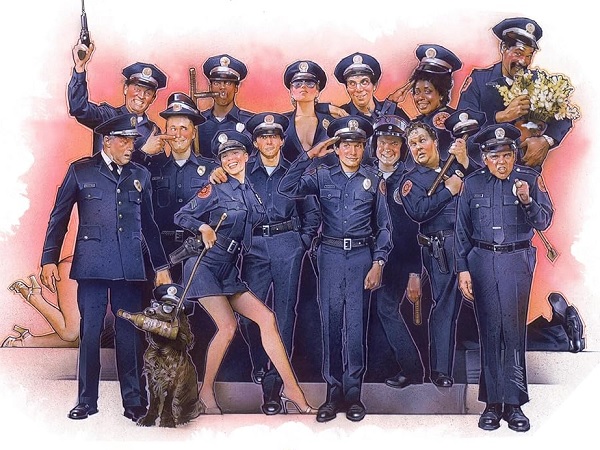
First out of the blocks – and the best received of the bunch – is Police Academy (1984). Directed by Hugh Wilson, the film boasts a cast which includes Steve Guttenberg, Kim Cattrall, Bubba Smith, Michael Winslow, David Graf, Bruce Mahler, Marion Ramsey, Leslie Easterbrook, G. W. Bailey, and George Gaynes, and focuses its story on a Metropolitan Police Force who announce they will accept anyone and everyone who applies for police training, in one huge (and potentially dumb) recruitment drive.
This of course brings a lot of quirky characters out of the woodwork. Chief amongst these applicants is Guttenberg’s Carey Mahoney – a perpetual underachiever who is forced to enrol in the academy to avoid jail time.
Mahoney is joined by human sound machine Larvell Jones; gun obsessed Eugene Tackleberry; mildly spoken Laverne Hooks; the towering but rather gentle Moses Hightower; accident prone Douglas Fackler; bored socialite Karen Thompson; heartthrob George Martin; and the meek Leslie Barbara. Together they attempt to become cops, while under the watchful eye of the somewhat daft Commandant Lassard, the ruthless Lieutenant Harris, and the firm but fair Sergeant Callahan.
OK, so there’s a lot of characters to keep track of, but the ensemble of goofy cadets and established cops in Police Academy is a winning formula. The same can be said for the cheap but enjoyable gags, memorable moments, and the marvellous theme tune by Robert Folk.
Sure, Police Academy is very dated, with some of the terminology now unacceptable by today’s standards, but the oddball cops ensure the movie has enough charm to see it through. This is a fun ‘80s comedy if you lower expectations.
__
Police Academy 2: Their First Assignment (1985)
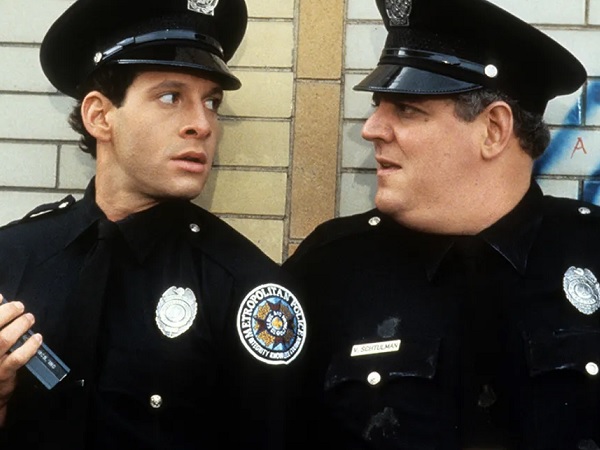
And of course, the charm (and the financial success) of Police Academy paved the way for director Jerry Paris’ Police Academy 2: Their First Assignment (1985). Not everyone sticks around for the sequel (Kim Cattrall is gone for good), but most of the key characters remain in place, while new faces such as Sweetchuck (Tim Kazurinsky), Zed (Bobcat Goldthwait), Captain Mauser (Art Metrano), and Proctor (Lance Kinsey) join the sequel and become icons of the series.
Police Academy 2 utilises the same formula as Police Academy, including the daft characters and catchphrases, and produces similar results. It’s clear the edges have been softened a touch for this sequel, to widen the appeal to a slightly younger demographic, but it’s still fun to watch.
As for the plot? The cadets have graduated and as the title suggests, they are sent on their first assignment.
Their job is to police the worst precinct in town, which is being overrun by a gang. What follows is daft antics and plenty of silly humour.
__
Police Academy 3: Back in Training (1986)

For Police Academy 3: Back in Training (1986) Jerry Paris remains on director duties and the majority of the core cast are still in place. Callahan (Easterbrook) returns, having sat out of the previous entry, and the humour is largely the same, even if the tone continues to lighten.
As for the plot, well, by this point it’s beginning to become inconsequential. For this third instalment, both Lassard’s academy and Mauser’s academy are under threat of closure due to budget cuts, causing cop conflict and a paper-thin story along the way.
Police Academy 3 remains entertaining, even if it doesn’t push any envelopes. David Graf’s Tackleberry is the MVP of the film (and of the series as a whole), and there are a few laughs to be had.
__
Police Academy 4: Citizens on Patrol (1987)

Jim Drake sits in the director’s chair for Police Academy 4: Citizens on Patrol (1987) (Jerry Paris sadly passed away ten days after the release of Part 3).
With this instalment, Lieutenant Harris is back, having been awol for Part 2 and 3, while Mauser is nowhere to be seen. Meanwhile, this is the first entry not to feature the catchphrase, “Don’t move, dirtbag”, and the last entry to include The Blue Oyster – a gay bar which pops up in all the previous movies.
The story – which no longer seems important – sees academy graduates train a group of new recruits. Mirth, merriment, and an early appearance from David Spade follows.
Once again, the eclectic cast of characters are the main selling point. This includes Mrs. Feldman (Billie Bird) and Thomas ‘House’ Conklin (Tab Thacker).
__
Police Academy 5: Assignment Miami Beach (1988)

Alan Myerson directs the next entry, Police Academy 5: Assignment Miami Beach (1988). This film sees Commandant Lassard travel to Miami, where he and his officers get caught up in a plot involving stolen diamonds.
For this fifth film, there’s no Steve Guttenberg, so Mahoney is gone, and *spoiler* he doesn’t return for any of the remaining instalments. Meanwhile, House is pushed to the front, and a new lead arrives in the form of Nick Lassard (Matt McCoy).
Unfortunately Lassard’s introduction can’t save this entry, which is quite tedious. The Police Academy series is circling full cartoon territory with this film and the novelty is certainly wearing off.
The characters are still the big draw, but the series is aiming for an even younger demographic. There are no fresh ideas and the best gag is a Jaws parody which arrives 13 years too late.
__
Police Academy 6: City Under Siege (1989)
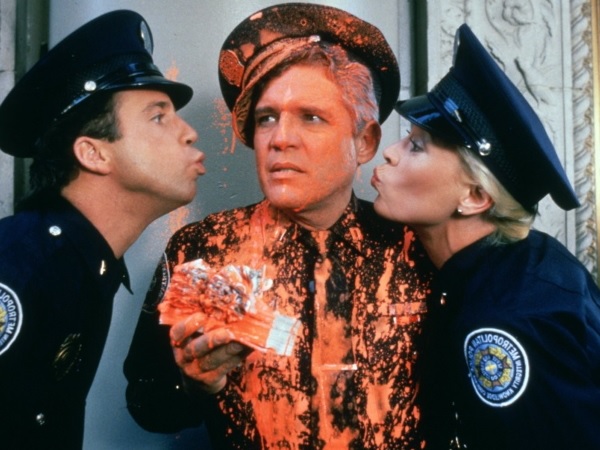
Thankfully things pick up in Peter Bonerz Police Academy 6: City Under Siege (1989), which focuses on a crimewave being implemented by the Wilson Heights gang. The gang are very effective at evading police capture, largely because they have assistance from a mysterious figure who is working in the background.
With Police Academy 6, the series is once again aimed squarely at a younger market, but this time with a better understanding of what it ultimately wants to achieve. The result is a fun entry and for the first time since the original Police Academy there‘s an actual plot, with decent villains!
Police Academy 6 is an improvement on Police Academy 5 and a stronger instalment than anyone could expect at this point. The film also brings back Fackler, who last appeared in Part 3, although this is his final hurrah with the movie series.
Part 6 also marks the end of the road for Hightower, Hooks, Proctor, and Nick Lassard. It’s also the final film for Commissioner Hurst (George R. Robertson), who appears in every film since the original.
__
Police Academy: Mission to Moscow (1994)

And finally, from the release of Police Academy in 1984, up until the arrival of Police Academy 6 in 1989, the series pumped out a new entry on an annual basis. However, between Part 6 and the seventh instalment, Police Academy: Mission to Moscow (1994), there is a five year gap and boy, is that five year gap noticeable.
Despite its short, 83-minute runtime, this final sequel is painful to watch and incredibly slow. Director Alan Metter assembles whoever is still willing to be involved in the Police Academy films for a jumbled story about a mafia boss and a partnership between Russia and the US.
And yeah, that’s about it. Nothing in the movie works (not a thing), and it comes and goes without a single laugh.
To put it simply: The five year pause between City Under Siege and Mission to Moscow was long enough for any ounce of magic or goodwill to evaporate. Not even new cast members Ron Perlman, Christopher Lee, and Claire Forlani can save this mind-numbing bore-fest, which is generally disliked by everyone and anyone.
And yes, this includes fans of the series. Even Police Academy aficionados believe Mission to Moscow to be a crime against cinema.
—
Tag lines
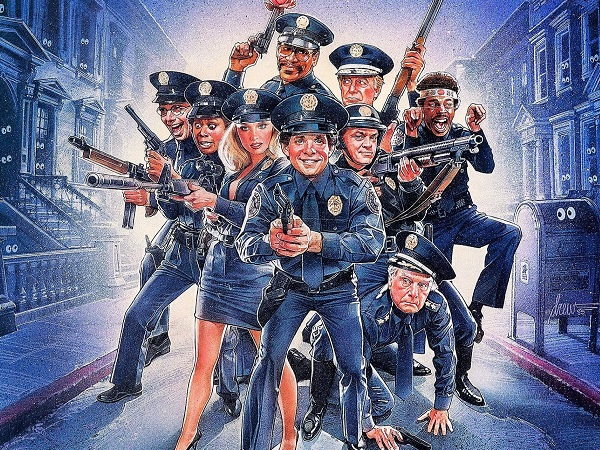
With each new movie, there’s a new poster, as well as a new tagline. Here are the taglines for movies one through seven:
- Police Academy – “The new police recruits. Call them slobs. Call them jerks. Call them gross. Just don’t call them when you’re in trouble.”
- Police Academy 2: Their First Assignment – “Watch out! They’ve got to clean up the worst crime district in the world. But that’s no problem. They’re the worst police force in the universe.”
- Police Academy 3: Back in Action – “Run for cover! The original cast is coming to save their school… and it’s open season on anyone who gets within range.”
- Police Academy 4: Citizens on Patrol – “Take off with the original cast… and some new civilian recruits as they take to the streets and the skies to fight crime.”
- Police Academy 5: Assignment Miami Beach – “Hold everything! The cadets are dropping in on Miami Beach for an all new adventure.”
- Police Academy 6: City Under Siege – “The grads are going undercover in the city to unmask the mastermind of crime.”
- Police Academy: Mission to Moscow – “Just when we thought the Cold War was over… leave it to these guys to heat it up again.”
—
Star Movie

So, taking into account all seven movies, which is the best? Well, it’s fairly clear that Police Academy is the strongest entry in the series.
There is plenty of fun to be found in the sequels, and a few of the more memorable characters appear after the first film (Zed, Sweetchuck, Proctor, etc), but Police Academy is the best written entry in the series. It also introduces most of the major players who become fan-favourites, which means it deserves to be awarded Star Movie status.
And if you like Police Academy (or the Police Academy movie series), you may also like:
- Combat Academy (1986) – Police Academy co-writer, Neal Israel directs this TV movie comedy about two high school misfits who are forced to spend a year at the Kirkland Military School.
- The Naked Gun: From the Files of Police Squad! (1988) – Leslie Nielsen takes the lead playing bumbling police detective, Frank Drebin in this hilarious cop spoof.
- Loaded Weapon 1 (1993) – Emilio Estevez and Samuel L. Jackson team-up for this buddy comedy which spoofs various action movies including Die Hard, Dirty Harry, and the Lethal Weapon movie series.
—
That’s it for this edition of Movie Reviews Franchise Focus, but this doesn’t have to be the end of your movie journey. If you want more film goodness you can have it!
Be sure to take a look at the monthly editions of Movie Reviews Special, covering subjects such as Tom Cruise and the 1990 Box Office Top Five, or the weekly editions of Movie Reviews 2025 which cover all the latest movie reviews. Here you’ll find a wealth of information and reviews for some of your old favourite films, or your new favourite films.
Alex
__

__
Thank you for taking the time to read Movie Reviews Franchise Focus on It’s A Stampede!. For more reviews, check out the recommended reads below.
 It's A Stampede!
Leave a comment