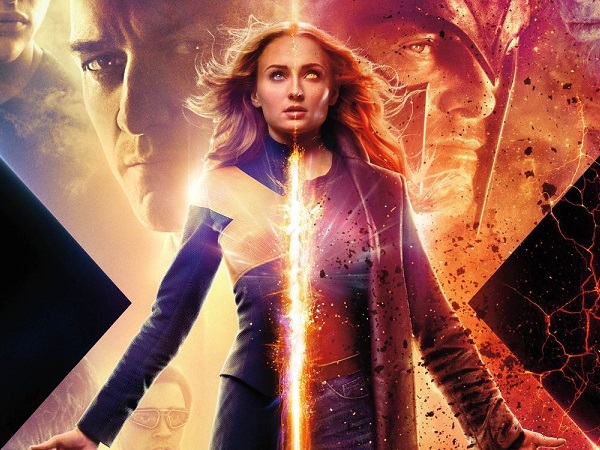
Since 1963, the X-Men have been entertaining readers the world over via a collection of imaginative and exciting comic book stories published by Marvel Comics. The mutant super hero group, founded by Professor Charles Xavier, have appeared in a string of terrific tales and action-packed adventures, thrilling countless fans in the process.
For the first three decades of their existence, the X-Men‘s stories were largely confined to comic book pages, with the occasional cartoon appearance for good measure. However, it wasn’t long before they started to appear in a string of hit blockbuster movies, starring the likes of Hugh Jackman, Patrick Stewart, and Ian McKellen, to name but a few.
The X-Men‘s first brush with film came via a low-budget television movie in 1996, which largely came and went with little notice. However, in 2000, things changed considerably thanks to the debut of the big-budget action spectacular, X-Men.
But how familiar are you with the X-Men movie series? Have you followed every entry or are you a little spotty in places?
Well, whatever your experience is with the X-Men movies, hopefully this post will help you out. Below you’ll find a run-through of all the X-Men films, including the prequels, sequels, and spin-offs, as well as the oft-forgotten 1996 television movie, Generation X.
__
The X-Men television movie: Generation X

As noted above, the X-Men movie series technically began in 1996 with the broadcast of a television movie called Generation X. The film – based on the X-Men-related comic book of the same name – made its debut on February 20th, airing on FOX in the US, before receiving a limited VHS release abroad.
Directed by Jack Sholder, Generation X starred Finola Hughes, Matt Frewer, Jeremy Ratchford, and Heather McComb. The movie followed the story of a group of mutant outcasts, with unique abilities, who are taken to the Xavier’s School for Gifted Youngsters to help them learn how to control their ‘powers’.
Conceived as a pilot for a potential television series, and granted a modest budget of $4 million, it was hoped that Generation X would be a big success. The X-Men were considerably popular during the 1990s, thanks to a best-selling comic book and a hit animated show, and it was believed that Generation X could build upon this.
However, with a limited story, poor special effects, and various character tweaks for budgetary reasons, Generation X failed to gain any traction. X-Men fans were underwhelmed, general audiences were largely disinterested, and the movie came and went very quickly.
Although Generation X was released on VHS, opening it up to a wider audience overseas, the film is mostly forgotten about these days. It didn’t work out as planned, it is now quite difficult to come by, and unless it receives a digital upgrade and a re-release at any point in the future, it will mostly exist as a footnote in history.
__
The X-Men movie series in order

X-Men (2000)
Although Generation X did not prove popular with television viewers, 20th Century Fox was still keen to get an X-Men movie off the ground. The comics had dominated comic book shelves throughout the 1990s; the cartoon series had helped to increase exposure and awareness of the brand; and all associated toys and merchandising sales had made it clear this was a hot property.
So, the studio pressed ahead and in 2000 finally achieved its goal when X-Men arrived in cinemas. Featuring a cast that included Patrick Stewart, Halle Berry, Ian McKellen, and a newcomer called Hugh Jackman (playing fan-favourite character, Wolverine), X-Men told the story of two factions of mutants at odds with each other while living in a world that hates and fears them.
On one side of the argument is Professor Charles Xavier, who leads a secret mutant super-group, known as the X-Men. The X-Men spend their days at Xavier’s School for Gifted Mutants, where they learn how to control their powers, and work towards the shared belief that mutants and non-mutants can peacefully co-exist.
On the other side of the argument is Magneto, a former friends of Xavier’s, as well as the powerful leader of the Brotherhood of Mutants. Magneto believes that mutants are the dominant species on the planet and they should not live in fear from the actions and bigotry of ordinary humans.
Meanwhile, in the middle are Rogue and Wolverine – two characters who find themselves in the midst of this long-brewing feud. Rogue has the unique ability to absorb anyone’s thoughts and memories with a single touch, while Wolverine has the power to regenerate, as well as a perplexing and seemingly indestructible skeleton made of the metal, adamantium.
X2 (2003)
Boasting likeable characters, strong central performances (especially from Jackman as Wolverine), and a captivating story which worked as an allegory for prejudices, X-Men proved to be a hit at the box-office. General audiences liked what they saw, long-time fans agreed, and Fox’s desire to bring X-Men to the big screen paid off.
Due to the popularity of the movie, 20th Century Fox soon gave the go-ahead for a sequel called X2 (aka X-Men 2/X2: X-Men United). The majority of the cast would return for this direct follow-up, while newcomers such Alan Cumming and Brian Cox would join the ensemble playing new characters Nightcrawler and William Stryker, respectively.
Picking up shortly after the events of its predecessor, Wolverine sets off on a journey to uncover his mysterious past, to hopefully discover the secret behind his skeleton. This in turn puts him on a path towards Stryker – a military scientist responsible for experimenting on mutants as part of a shadowy government project known as Weapon X.
X-Men: The Last Stand (2006)
Upon release, X2 was a huge hit. Not only did it make more money at the box-office than its predecessor, but it was also popular with critics too, who praised its approach to storytelling, as well as its cast.
As such, it was a forgone conclusion that a third movie would follow, and during summer 2006 the next sequel hit cinema screens under the title X-Men: The Last Stand. Pitched as the final entry in the X-Men trilogy, the story focused on a supposed ‘cure’ for mutants, which could essentially wipe out the existence of the mutant gene entirely.
However, not just content with focusing on one storyline, the movie also attempted to adapt classic X-Men comic book story, the ‘Dark Phoenix Saga‘, while also bringing together the final battle between Magneto and the X-Men. The end result was a somewhat rushed instalment, that tried to do many things rather than focus on one.
Some of those things worked – including the introduction of new character, the Beast, as played by Kelsey Grammer – while others were less successful. Yet despite any shortcomings, as well as a mixed reception from critics, the movie was another box-office hit.
X-Men Origins: Wolverine (2009)
Despite some misjudged fumbling on X-Men: The Last Stand, as well as 20th Century Fox’s suggestion this was the end of the road for the X-Men movies, audiences were still interested in seeing more from Marvel’s merry mutants. So, rather than continue taking the story forward, the studio opted instead to make a prequel, which would focus on one key character: Wolverine.
Hugh Jackman returned to the role of Wolverine for a fourth time, in a film that would take place a decade (or so) before the events of 2000’s X-Men. The movie – titled X-Men Origins: Wolverine – would finally reveal Wolverine’s secret past, and explore his troubled history with William Stryker.
Although this film was conceived as a solo picture, and for the most part this was true, X-Men Origins: Wolverine did find plenty of room for more mutant characters including Gambit, Emma Frost, and Silverfox. Ryan Reynolds also took a small role in the film, playing the smart-talking mutant mercenary, Wade Wilson, aka Deadpool.
X-Men: First Class (2011)
X-Men Origins: Wolverine was not viewed as a particularly strong entry in the X-Men series, however it did prove a number of things. Firstly, audiences continued to enjoy seeing Hugh Jackman as Wolverine; secondly, X-Men prequels were workable; and thirdly, X-Men movies could still make plenty of money.
With this in mind, 20th Century Fox pressed ahead with a new movie: X-Men: First Class. This film would act as another prequel to 2000’s X-Men, but this time the story would rewind back to the 1960s to focus on the early friendship of Charles Xavier and Magneto.
A new cast of actors were brought in, most notably James McAvoy and Michael Fassbender as Xavier and Magneto respectively, while X-Men characters such as Banshee and Havok were introduced. Hugh Jackman also popped up for a quick cameo.
The Wolverine (2013)
Although the X-Men movies had certainly not fizzled out, X-Men: First Class revitalised the franchise following the lukewarm response to X-Men: The Last Stand and X-Men: Origins Wolverine. Critics liked First Class a lot, as did audiences, and it was another box-office hit.
This convinced 20th Century to push forward with further X-Men ‘team’ movies, but not before finding time for another solo Wolverine film. Hugh Jackman’s Wolverine was a big hit, who had appeared in every X-Men movie from 2000 onward, so the studio wanted to develop his story even further.
Released in 2013, under the title ‘The Wolverine‘, this next film would pick up Wolverine’s story shortly after the events of X-Men: The Last Stand, with Wolverine haunted by the death of his fellow teammate, Jean Grey. In the film, Wolverine heads off to Japan, where he finds himself stripped of his abilities and facing an old enemy from his past.
X-Men: Days of Future Past (2014)
Although the X-Men films had largely dominated the comic book movie landscape throughout the 2000s and into the early 2010s, in 2008 the Marvel Cinematic Universe got under way with the arrival of Iron Man. The MCU then continued with various interconnected movies starring Captain America and Thor etc, before building up to The Avengers in 2012.
The Avengers was a huge hit which changed the movie-making landscape as a result. Every studio saw the potential in shared movie universes, and many tried to raid their own vaults for properties that could be turned into a cinematic wonderland.
With 20th Century Fox already sitting on its own little universe in the shape of the X-Men movies, it quickly became apparent the best way forward was to go BIG! So, for the next X-Men movie, 20th Century Fox decided to pull out all the stops to create its own epic storyline.
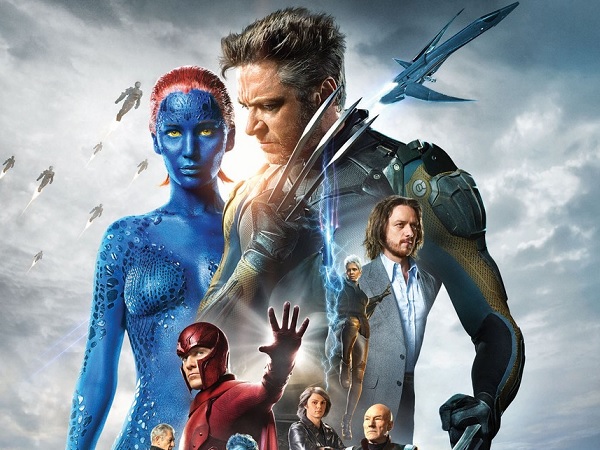
The result was X-Men: Days of Future Past – a time-hopping adventure, that took characters and ideas from the original X-Men trilogy, as well as the Wolverine movies, and combine them with characters from X-Men: First Class. Set during the 1970s, as well as the not-too distant future, the film would act as both a prequel and a sequel; it would help to streamline some continuity issues between the previous films; and it would place Wolverine at the centre of the film.
Perhaps most important of all, X-Men: Days of Future Past would reposition the X-Men movie series from being a collection of films, with no clear direction, into a more cohesive X-Men Cinematic Universe. From here on out, further spin-offs, sequels, and prequels would be seen as existing in this ever-expanding universe, with 20th Century Fox also keen to increase the frequency of its X-Men movie output.
Deadpool (2016)
With X-Men: Days of Future Past having worked its magic, the first post-Days of Future Past movie arrived in 2016. The film was Deadpool, which starred Ryan Reynolds, playing the smart-talking mutant of the same name.
Although Reynolds had previously played a version of Deadpool in X-Men Origins: Wolverine, 2016’s Deadpool was effectively a new starting point for the character. X-Men: Days of Future Past had rebooted and reworked the X-Men timelines to allow for numerous changes, and Deadpool was the first film to take advantage of this.
Deadpool was also the first X-Men movie NOT to feature an appearance from Hugh Jackman as Wolverine. However, the character did get referenced on a couple of occasions.
X-Men: Apocalypse (2016)
Following hot on the heels of Deadpool (in the same year no less) was yet another X-Men ‘team’ movie. The film – X-Men: Apocalypse – was set during the 1980s, and would feature cast members from X-Men: First Class and X-Men: Days of Future Past, as well as young versions of characters from the first three X-Men films, including Jean Grey, Storm, Nightcrawler, and Cyclops.
The story this time around focused on the arrival of an all-powerful and ancient mutant called Apocalypse. In the film, the X-Men need to band together to stop Apocalypse’s reign of terror, which threatens all life on the planet.
Hugh Jackman made yet another appearance, taking a small cameo role in this film, however, the actor had made it clear his time in the role of Wolverine was coming to an end. This then lead to the development of the next film in the X-Men series.
Logan (2017)
Having played Wolverine in every X-Men movie since 2000, with the exception of 2016’s Deadpool, Hugh Jackman announced he would be hanging up his claws and retiring from the role. However, before exiting the franchise, he would appear in one final solo Wolverine film, titled Logan.
Set in the not-too distant future (an alternate future to the one depicted in X-Men: Days of Future Past), Logan picks up Wolverine’s story with the character attempting to keep a low profile. In the film, all of the X-Men have been killed, with the exception of Professor Charles Xavier, and Wolverine has taken on the responsibility of looking after his old friend, despite both of them experiencing failing health.

Deadpool 2 (2018)
With Hugh Jackman having bowed out of the X-Men series with Logan, 20th Century Fox was keen to drive ever-onward with other projects. One of these was Deadpool 2 – a direct sequel to 2016’s extremely popular, Deadpool.
Ryan Reynolds reprised the role of Wade Wilson/Deadpool for this follow-up, which introduced the time-travelling mutant, Cable. The story saw Deadpool form his own team of mutants, known as X-Force, and was a likeable and well-received entry in the series.
X-Men: Dark Phoenix (2019)
Although 20th Century Fox had grand plans to create a seemingly endless series of movies set within the X-Men Cinematic Universe, these plans came to an abrupt halt when in 2019 Disney bought 20th Century Fox, and effectively closed down the X-Men movie series down. Disney owned and operated the majority of Marvel properties, as part of the Marvel Cinematic Universe, and it did not wish for the X-Men movies to be seen as competition or remain disconnected from the MCU forever.
However, prior to the ‘buy-out’ of 20th Century Fox, the studio had already put two additional X-Men movies into production. One of these was X-Men: Dark Phoenix – another ‘team’ movie, featuring the prequel cast of characters, which was set during the 1990s and would adapt the Dark Phoenix Saga for a second time.
The New Mutants (2021)
The other project that was in production during the Fox/Disney ‘buy out’ was The New Mutants. This movie would focus on a new collection of mutant characters, based on the comic book of the same name.
Although The New Mutants was initially conceived as the first entry in a series of New Mutant films, the Fox/Disney situation cancelled this plan in its tracks. As such, 20th Century Fox’s X-Men Cinematic Universe ended rather abruptly with The New Mutants, going out with a whimper, rather than a bang.
Deadpool & Wolverine (2024)
Although 20th Century Fox’s X-Men Cinematic Universe was essentially dissolved following the release of The New Mutants, this wasn’t the end of the road for the X-Men. Disney was keen to incorporate the X-Men into the Marvel Cinematic Universe, and felt another Deadpool movie would be a good way to bridge the gap between the two universes.
Bringing Ryan Reynolds back for another adventure, and convincing Hugh Jackman to come back out of retirement to play Wolverine, Deadpool & Wolverine was pitched as an MCU movie that would link Fox’s existing X-Men movies with the Marvel Cinematic Universe, via the use of the multiverse. Deadpool would straddle the two universes, and both the X-Men Cinematic Universe and the MCU would share a connection.
The order of the X-Men movies
To date (and including the Fox television movie from 1996) there are 15 X-Men movies. The X-Men movies are in this order:
- Generation X (1996)
- X-Men (2000)
- X2 (2003)
- X-Men: The Last Stand (2006)
- X-Men Origins: Wolverine (2009)
- X-Men: First Class (2011)
- The Wolverine (2013)
- X-Men: Days of Future Past (2014)
- Deadpool (2016)
- X-Men: Apocalypse (2016)
- Logan (2017)
- Deadpool 2 (2018)
- X-Men: Dark Phoenix (2019)
- The New Mutants (2021)
- Deadpool & Wolverine (2024)
It is important to note the X-Men movie series is comprised of sequels, prequels, and spin-offs. Some of these films are tightly connected, some not so much, and there are a few inconsistencies along the way.
As the film series progresses, the story also jumps back-and-forth across the timeline, with some of the key characters getting younger and/or older. While many will debate the ‘best viewing order’ of the X-Men movies, the easiest way to view the films is in the order they were originally released.
If you watch the films in the order they were released, the time-hopping will become clear. X-Men: Days of Future Past links up the different timelines, connecting the prequels and sequels accordingly, and any confusion should disappear.
__
Are all of the X-Men movies part of the same series?
All of the X-Men movies are part of the same series, with the exception of the 1996 television movie, Generation X. Although this movie uses the same school as the main X-Men films (including the same shooting location), it is not part of the series, and exists as a one-off film, unrelated to what followed.
Generation X was conceived as a starting point for an X-Men series, but when it failed, it was abandoned. 2000’s X-Men became the new (and definitive) starting point.
The multiverse cameos
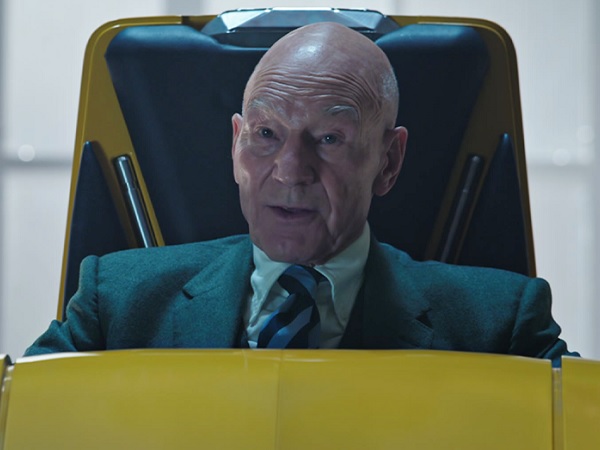
Outside of the X-Men movies listed above, Professor Charles Xavier (as played by Patrick Stewart) appears in a cameo role in the Marvel Cinematic Universe movie, Doctor Strange in the Multiverse of Madness (2022). The Xavier seen briefly in this film is a variant Xavier from across the multiverse.
The Beast (as played by Kelsey Grammer) also appears in a mid-credit scene in the MCU movie, The Marvels (2023). The Beast seen briefly in this film is a variant Beast from across the multiverse.
__
Who are the cast of the X-Men movies and who are the directors of the X-Men film series?
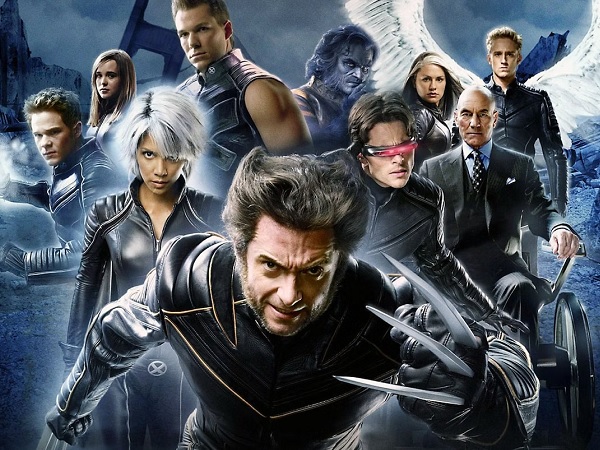
The X-Men movie series has a large and impressive cast, with many leading names in the mix. The most notable amongst these names is Hugh Jackman, who plays the role of Wolverine across multiple entries in the series.
When he was cast in 2000’s X-Men, Hugh Jackman was a relatively unknown actor, but after impressing audiences (including countless comic book fans) with his performance, Jackman’s career soon soared. Wolverine is undoubtedly Jackman’s signature role, but the actor has also enjoyed success in movies including The Greatest Showman, Australia, The Prestige, and Prisoners.
Other actors in the X-Men movie series include Patrick Stewart, Ian McKellen, Halle Berry, Famke Janssen, James Marsden, Anna Paquin, Rebecca Romijn, Shawn Ashmore, Kelly Hu, Alan Cumming, Brian Cox, Elliot Page, Kelsey Grammer, Vinnie Jones, Ryan Reynolds, Liev Schreiber, will.i.am, Troye Sivan, Danny Huston, James McAvoy, Michael Fassbender, Jennifer Lawrence, Nicholas Hoult, Rose Byrne, Kevin Bacon, Zoë Kravitz, Evan Peters, Peter Dinklage, Sophie Turner, Oscar Isaac, Alexandra Shipp, Tye Sheridan, Richard E. Grant, Dafne Keen, Josh Brolin, Zazie Beetz, Morena Baccarin, Brianna Hildebrand, Anya Taylor-Joy, Maisie Williams, and Charlie Heaton.
As for the X-Men movie directors, they are as follows:
- Jack Shoulder directed Generation X
- Bryan Singer directed X-Men, X2, X-Men: Days of Future Past, and X-Men: Apocalypse
- Brett Ratner directed X-Men: The Last Stand
- Gavin Hood directed X-Men: Origins Wolverine
- James Mangold directed The Wolverine and Logan
- Matthew Vaughn directed X-Men: First Class
- Tim Miller directed Deadpool
- David Leitch directed Deadpool 2
- Simon Kinberg directed Dark Phoenix
- Josh Boone directed The New Mutants
- Shawn Levy directed Deadpool & Wolverine
__
Which is the best X-Men movie?

The general response to the X-Men movie series has been a positive one, with a number of entries in the collection often considered as some of the best comic book movies of all-time (X2, X-Men: Days of Future Past, Logan, etc). According to IMDb, the X-Men movies are rated as follows:
- Generation X (1996) – 4.4/10
- X-Men (2000) – 7.3/10
- X2 (2003) – 7.4/10
- X-Men: The Last Stand (2006) – 6.6/10
- X-Men Origins: Wolverine (2009) – 6.5/10
- X-Men: First Class (2011) – 7.7/10
- The Wolverine (2013) – 6.7/10
- X-Men: Days of Future Past (2014) – 7.9/10
- Deadpool (2016) – 8.0/10
- X-Men: Apocalypse (2016) – 6.9/10
- Logan (2017) – 8.1/10
- Deadpool 2 (2018) – 7.6/10
- X-Men: Dark Phoenix (2019) – 5.7/10
- The New Mutants (2021) – 5.3/10
- Deadpool & Wolverine (2024) – Not yet rated
__
Whether you’re a long-term X-Men fan or you’re just making your way into this universe now, you may wish to know the X-Men movies have been released on physical media, including DVD, Blu-ray, and 4K as part of various collection sets.
One of these sets is the X-Men Three-Film Collection, which includes the original X-Men Trilogy – X-Men, X-Men 2, and X-Men: The Last Stand – on 4K UHD.
The X-Men Three-Film Collection on 4K UHD is available from all good entertainment stores, including Amazon US and Amazon UK.
__
Disclaimer: I earn a commission for products purchased through some links in this article.
__

—
Thank you for stopping by It’s A Stampede! to read this post about the X-Men movie series. For more movie posts, be sure to check out the recommended reads below.
 It's A Stampede!
Leave a comment