
Can you believe it has been 20 years since the world almost ended due to climate change? What?! No? Oh, I think I got that wrong.
Well, that’s probably because I’m confusing real life with the plot of a big budget disaster movie. Hmm… maybe I should try that opening line again in another 20 years, and we’ll see how that comment lands a second time around?
Anyway, all of this preamble is my way of pointing out that action disaster movie, The Day After Tomorrow is celebrating a big anniversary. The film – directed, co-written, and co-produced by Roland Emmerich – made its debut in 2004, which means in 2024 it has clocked up 20 years of (almost) world-ending entertainment.
Based on the book The Coming Global Superstorm by Art Bell and Whitley Strieber, and starring Jake Gyllenhaal, Dennis Quaid, Ian Holm, and Sela Ward, The Day After Tomorrow tells the story of a weather-related global disaster which threatens to freeze all life on the planet. In short: A cataclysmic climate event occurs, which begins to usher in a new ice age.
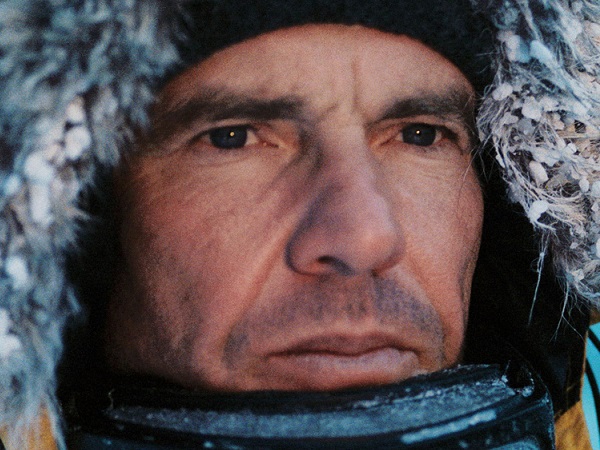
In the movie, paleoclimatologist Jack Hall believes the Earth is headed for an abrupt climate shift, which could occur within the next 100 years. He has conducted research which backs up his theory, and presents it to the members of the United Nations who mumble and stumble over their words and decide whether he’s correct in his assessment.
Maybe he’s wrong? Maybe Jack has miscalculated and everything will be fine.
*Pause for dramatic tension*
Jack is of course correct about an impending natural disaster, but his timing is off. The event isn’t going to happen within the next century, it’s happening now.
And as the world is hit by multiple forms of extreme weather, including heavy rain, lighting, a giant hail storm, snow, tornadoes, and typhoons, destruction occurs all over the planet. The end of the world is near, with a blizzard on the horizon, and the human race left facing its darkest and coldest hour.
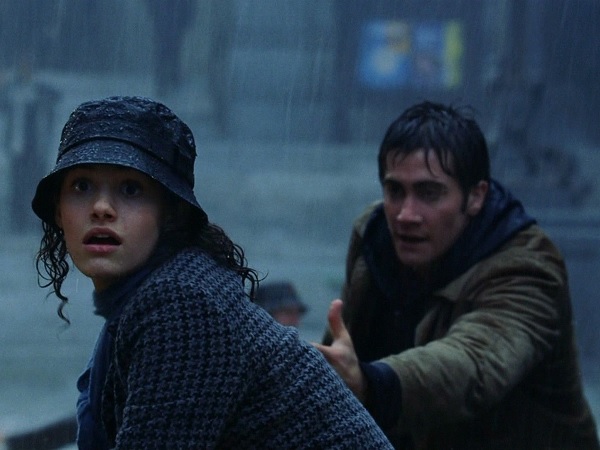
OK, so it’s important to say (and to make very clear), The Day After Tomorrow is not the best film in the world. The script is wishy-washy, the characters are forgettable, and when mass destruction is not taking place on screen the pacing dips considerably.
To put things very simply: The film suffers from being poorly written. It also struggles to match the same level of excitement as director Roland Emmerich’s 1996 disaster epic, Independence Day, which set a high bar for end of the world scenarios and made everything that came after seem less appealing.
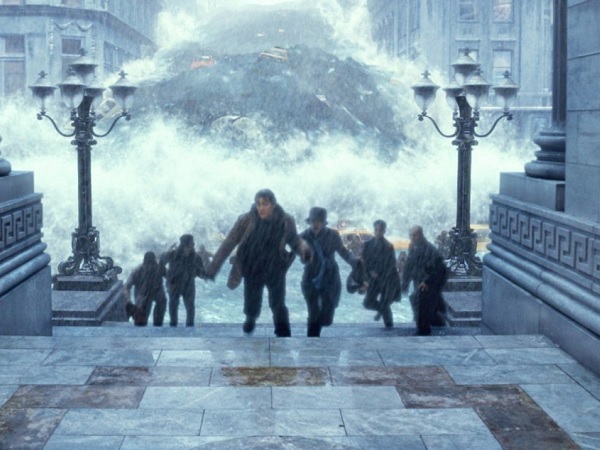
But all that said, The Day After Tomorrow has its moments and when it is indulging in the decimation of buildings, landmarks, and huge swathes of the world, it is gloriously entertaining stuff. There’s something endlessly engaging about watching mass destruction on an epic scale, and if Emmerich nails one thing better than most, it’s the way he delivers this kind of eye-popping spectacle.
Outside of some noticeable green screen work and a few slightly iffy CGI wolves, the visuals he serves up in The Day After Tomorrow are very impressive. Emmerich throws a lot at the screen, the majority of it sticks, and no one can honestly dunk on this movie because of its special effects.
The same thing goes for the sheer size and scale of what Emmerich goes for in this film. OK, so almost all of the action takes place in the US, but the climate catastrophe is aimed squarely at the whole world, and this is felt throughout the picture.
Emmerich goes big. He doesn’t always achieve what he sets out to do, but there’s no escaping his ambition.
Where the film struggles the most is in the aforementioned script, which feels like it was scribbled down on the back of a Post-It note, as well as in the film’s attempt to make audiences care about the survival of anyone on screen. For the record, people live, people die, it all becomes interchangeable.
The Day After Tomorrow has an ongoing plot thread about Jack travelling from Washington to Manhattan to save his son, Sam, but it’s nowhere near as interesting as it wants to be. The same goes for a side plot involving Jack’s wife, Lucy, which is equally underwhelming.
Arguably the reason these plots don’t work is because Jack (Dennis Quaid), Sam (Jake Gyllenhaal), and Lucy (Sela Ward) don’t spend any major screen time together. In the case of Jack and Sam, other than a phone call at the beginning of the film and a reunion at the end, these characters are essentially strangers and the film fails to convince otherwise.
The Day After Tomorrow’s biggest issue is that when the stakes are high, there’s very little interest in the humans. Why? Because everyone seems so one-note and bland.
Heck, even the late Ian Holm, who plays a whisky appreciating Scottish oceanographer, fades into the background because his character is underdeveloped and this is clearly a mistake. In truth, none of the characters are utilised effectively and this is a bizarre choice to make.
The action helps to cover up this problem where it can, but it isn’t always effective in papering over the cracks. However, if you can focus on the spectacle and ignore the weak characterisation there’s fun to be had.
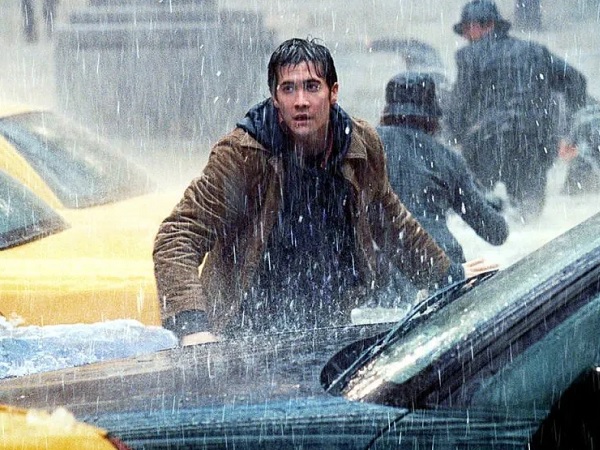
Taken as a popcorn movie and not much more, The Day After Tomorrow delivers thrills and spills. Twenty years on, it still struggles to serve up any decent character development, but it’s an easy watch and the visuals still stand up.
When it comes to disaster films, the visuals make a huge difference and this helps to keep things ticking along. So, while The Day After Tomorrow isn’t amazing it is enjoyable at times, so long as you don’t think too much about it.
Should you wish to watch The Day After Tomorrow the movie is currently available to stream on Disney+. If you’re not a Disney+ subscriber, The Day After Tomorrow is available to buy on DVD, Blu-ray, and through digital video on demand platforms.
—

__

Rewind to the ’90s
Ever wondered what Weekend at Bernie’s II, Stay Tuned, Body of Evidence, and Mandroid have in common? All of these films feature in Alex Wiggan’s book, Rewind to the ‘90s – a humorous and occasionally torturous journey through 100 movies from the 1990s.
Inspired by a long-running feature on the It’s A Stampede! blog, Rewind to the ‘90s, presents thoughts, observations, and a running commentary on some of the best and worst movies of the 1990s. This book reprints material originally featured on It’s A Stampede!, while serving up a wealth of new content, including anecdotes, reflections, general musings, and some bonus movies.
So, laugh, cry, and take an excursion through the highs and lows of cinema. Rewind to the ’90s is available on Amazon.
—
Disclaimer: I earn a commission for products purchased through some links in this article.
__
Thank you for taking the time to read this review on It’s A Stampede!. For more reviews, check out the recommended reads below.
 It's A Stampede!
Leave a comment